Introduction
In modern healthcare and laboratory environments, accurate identification is no longer optional—it is essential. Hospitals, pharmaceutical manufacturers, biotechnology companies, blood banks, and diagnostic laboratories rely heavily on durable laboratory medical labels to ensure traceability, operational efficiency, and patient safety.
A failed label can create serious problems. If a barcode becomes unreadable after freezer storage or a sample tube label peels off during transportation, laboratories may face sample loss, testing errors, compliance risks, and costly workflow interruptions.
For this reason, laboratory medical labels are specifically engineered to withstand demanding healthcare environments including ultra-low temperatures, moisture, alcohol cleaning, sterilization procedures, and frequent handling.
This article explains what laboratory medical labels are, the most common medical labeling solutions used in healthcare industries, key material options, important performance requirements, and how to select the right label solution for laboratory and medical applications.
What Are Laboratory Medical Labels?
Laboratory medical labels are specialized identification labels designed for healthcare and laboratory environments. These labels are commonly used to identify and track:
· Blood samples
· Cryogenic vials
· Test tubes
· Centrifuge tubes
· Pharmaceutical containers
· Syringes
· IV bags
· Medical devices
· Laboratory reagents
· Diagnostic specimens
Unlike standard commercial labels, laboratory medical labels are engineered for high durability and long-term readability under harsh environmental conditions.
Most laboratory medical labels are designed to support:
· Thermal transfer barcode printing
· QR code identification
· Variable data printing
· Laboratory automation systems
· Long-term storage applications
They play a critical role in modern healthcare traceability systems.
Why Laboratory Medical Labels Are Important
Ensuring Accurate Sample Traceability
Healthcare and diagnostic laboratories process thousands of samples every day. Reliable identification helps ensure each sample remains accurately tracked throughout storage, testing, and transportation.
Durable medical labels help reduce risks such as:
· Misidentified samples
· Lost specimens
· Incorrect diagnoses
· Testing delays
· Compliance failures
For large laboratories and pharmaceutical companies, accurate traceability is essential for quality management and regulatory compliance.
Improving Patient Safety
In medical environments, labeling accuracy directly impacts patient safety.
Reliable laboratory labels help prevent:
· Blood transfusion mistakes
· Medication mix-ups
· Sample handling errors
· Incorrect laboratory reporting
Clear and durable identification systems are essential for hospitals, blood banks, and healthcare institutions.
Supporting Laboratory Automation
Modern laboratories increasingly rely on:
· Barcode scanning systems
· Automated specimen tracking
· LIMS integration
· Digital inventory management
High-performance medical labels ensure stable barcode readability throughout the entire workflow process.
Maintaining Regulatory Compliance
Healthcare industries must comply with strict regulations and traceability requirements.
Laboratory medical labels often support:
· FDA compliance
· UDI systems
· Laboratory accreditation standards
· Pharmaceutical traceability regulations
Long-term label durability is critical for maintaining compliance documentation.
Common Types of Laboratory Medical Labels
Cryogenic Labels
Cryogenic labels are designed for ultra-low temperature environments such as:
· -80°C laboratory freezers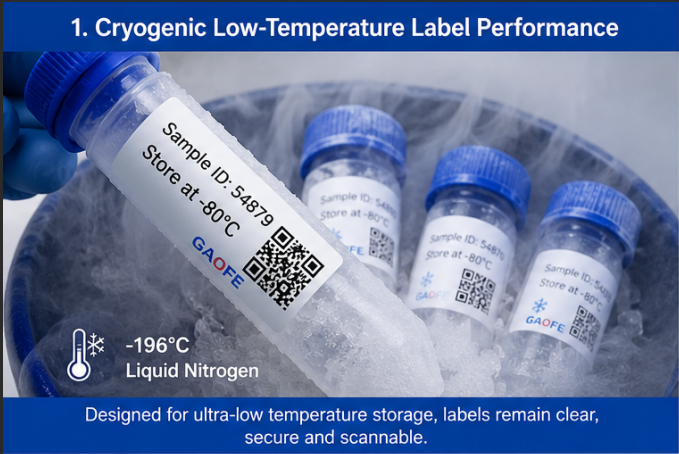
· Dry ice transportation
· Liquid nitrogen storage (-196°C)
These labels are widely used in:
· Biobanks
· Cell therapy laboratories
· Vaccine storage facilities
· Biotechnology companies
· Pharmaceutical research centers
Key Features
· Excellent low-temperature adhesion
· Freeze-thaw cycle resistance
· Waterproof surface
· Chemical resistance
· Long-term barcode readability
Cryogenic labeling is one of the fastest-growing sectors in the healthcare labeling industry.
Laboratory Tube Labels
Tube labels are specifically designed for small-diameter laboratory containers such as:
· PCR tubes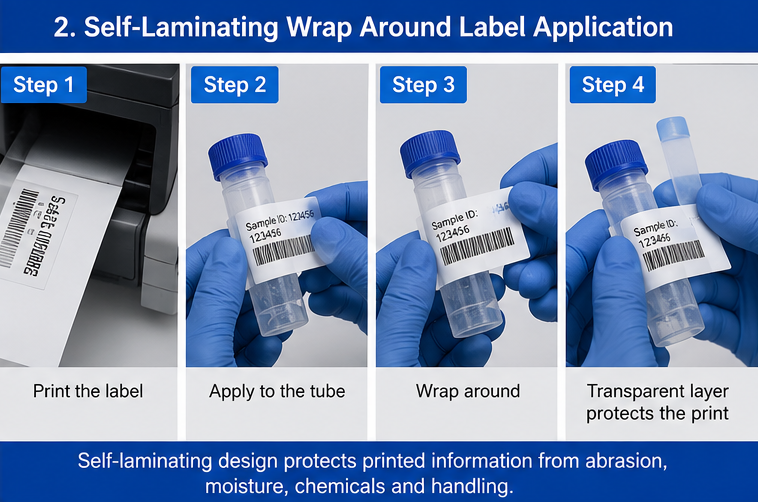
· Cryogenic vials
· Centrifuge tubes
· Test tubes
Popular Formats
Wrap Around Labels
Flexible labels designed to wrap securely around curved tube surfaces.
Self-Laminating Labels
Transparent overlaminate protects printed information from abrasion, chemicals, and moisture.
Flag Labels
Provide extended printable space for barcode scanning and laboratory identification.
Benefits
· High print clarity
· Strong adhesion
· Space-efficient identification
· Excellent scan performance
Blood Bag Labels
Blood bag labelsare essential for blood storage and transfusion management.
These labels require:
· Strong adhesion on flexible surfaces
· Refrigeration compatibility
· Moisture resistance
· Durable barcode performance
Accurate blood bag labeling plays a major role in patient safety and healthcare quality management.
Pharmaceutical Labels
Pharmaceutical labels are used for:
· Prescription bottles
· Syringes
· Medicine packaging
· IV bags
· Diagnostic kits
Common Requirements
· Tamper resistance
· Serialization compatibility
· Chemical resistance
· Regulatory information printing
Pharmaceutical labeling systems help improve product traceability and anti-counterfeiting protection.
Sterilization Labels
Sterilization labels are used for healthcare applications involving:
· Steam autoclave sterilization
· EO sterilization
· Medical equipment processing
Applications include:
· Surgical instruments
· Sterile packaging
· Medical trays
· Hospital equipment
Some sterilization labels include chemical indicators that visually confirm sterilization exposure.
Materials Used in Laboratory Medical Labels
Selecting the correct material is critical for long-term performance.
Polyester Labels
Polyester labels are primarily made of Polyester material and are widely used in healthcare environments requiring durability and chemical resistance.
Applications
· Medical device labels
· Equipment identification
· Asset tracking labels
Advantages
· Excellent chemical resistance
· High durability
· Stable barcode performance
· Long-term readability
Synthetic Paper Labels
Synthetic paper labels are primarily made of Vinyl material and are commonly used for cryogenic and flexible tube labeling.
Applications
· Cryogenic labels
· Blood sample labels
· Freezer labels
· Tube identification labels
Advantages
· Excellent flexibility
· Waterproof performance
· Tear resistance
· Strong low-temperature performance
Polyimide Labels
Polyimide labels are designed for extreme heat resistance.
Applications
· Autoclave labeling
· Sterilization environments
· Medical electronics
Advantages
· High-temperature stability
· Sterilization compatibility
· Long-term durability
Key Performance Requirements for Medical Labels
Temperature Resistance
Medical labels may need to withstand:
· Ultra-low temperature storage
· High-temperature sterilization
· Rapid temperature changes
Selecting the proper adhesive and material combination is essential.
Chemical Resistance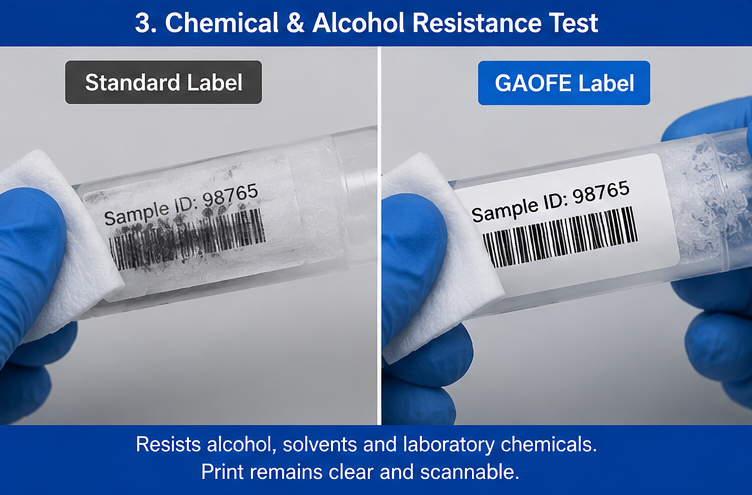
Laboratory labels are frequently exposed to:
· Alcohol
· Disinfectants
· Xylene
· Acetone
· Cleaning solvents
Labels must maintain readability after repeated chemical exposure.
Strong Adhesion Performance
Medical labels are often applied to:
· Curved surfaces
· Wet containers
· Frozen tubes
· Flexible bags
Industrial-grade adhesives help ensure reliable long-term bonding.
Barcode Readability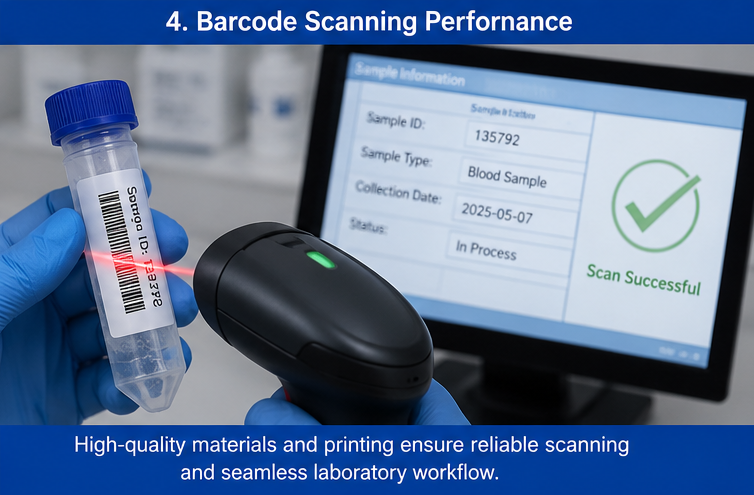
Healthcare automation systems require:
· High-resolution printing
· Reliable scanning
· Smudge resistance
· Abrasion resistance
Poor barcode quality can disrupt laboratory operations.
How to Choose the Right Laboratory Medical Labels
Evaluate the Environment
Before selecting labels, consider:
· Storage temperature
· Chemical exposure
· Sterilization requirements
· Indoor or outdoor usage
· Moisture exposure
Different environments require different material solutions.
Match the Adhesive to the Surface
Different surfaces require different adhesive systems.
Common surfaces include:
· Plastic tubes
· Glass vials
· Flexible blood bags
· Stainless steel devices
Choosing the correct adhesive improves long-term reliability.
Confirm Printing Compatibility
Most healthcare facilities use:
· Thermal transfer printers
· Barcode systems
· Variable data printing
Medical labels should support stable and durable printing performance.
Consider Compliance Requirements
Large healthcare organizations and pharmaceutical companies often require:
· FDA compliance
· RoHS compliance
· REACH compliance
· UDI compatibility
Understanding regulatory requirements is important when selecting materials.
Trends in the Healthcare Labeling Industry
Growth of Biotechnology and Cryogenic Storage
The expansion of biotechnology, cell therapy, and genetic research is driving rapid demand for cryogenic labeling solutions.
Long-term biological sample storage requires highly durable labels capable of surviving extreme environments.
Increasing Demand for Laboratory Automation
Healthcare laboratories continue investing in:
· Automated barcode systems
· Digital sample management
· Laboratory information systems
This increases demand for high-quality barcode-compatible labels.
Rising Importance of UDI Labels
UDI (Unique Device Identification) systems are becoming increasingly important worldwide.
Medical device manufacturers require durable labels with permanent traceability performance.
Demand for Custom Healthcare Label Solutions
Large healthcare and pharmaceutical customers increasingly request:
· OEM customization
· Custom sizes
· Color coding
· Variable data printing
· Specialized adhesives
Customized labeling solutions help improve operational efficiency and brand consistency.
Conclusion
Laboratory medical labels are essential components of modern healthcare, pharmaceutical, and biotechnology operations. From cryogenic storage and blood sample tracking to pharmaceutical packaging and medical device identification, reliable labels help ensure patient safety, operational efficiency, and regulatory compliance.
As healthcare industries continue adopting automation, barcode tracking, and long-term biological storage systems, the demand for durable and high-performance medical labels will continue to grow.
Selecting the correct material, adhesive system, and printing compatibility is critical for ensuring reliable identification performance under demanding healthcare conditions.
GAOFE provides customized laboratory medical label solutions including cryogenic labels, laboratory tube labels, pharmaceutical labels, blood bag labels, and medical device identification labels for global healthcare and laboratory industries.
FAQ
Q: What are laboratory medical labels?
A: Laboratory medical labels are specialized identification labels used for medical samples, laboratory tubes, pharmaceutical products, and healthcare equipment.
Q: Why are cryogenic labels important?
A: Cryogenic labels are designed to survive ultra-low temperature environments such as liquid nitrogen storage while maintaining barcode readability and strong adhesion.
Q: What materials are commonly used for medical labels?
A: Common materials include Polyester, Synthetic Paper (Vinyl), and Polyimide depending on environmental requirements.
Q: Can laboratory medical labels resist alcohol and chemicals?
A: Yes. High-quality medical labels are designed to resist alcohol, disinfectants, cleaning chemicals, and laboratory solvents.
Q: Which printing method is commonly used for laboratory medical labels?
A: Thermal transfer printing is the most widely used method because it provides durable barcode and variable data printing.
Q: Can laboratory medical labels be customized?
A: Yes. Medical labels can be customized in material, size, adhesive type, barcode printing, color coding, and OEM branding.
Q: What industries commonly use laboratory medical labels?
A: Hospitals, biotechnology companies, pharmaceutical manufacturers, blood banks, diagnostic laboratories, and research institutions all widely use laboratory medical labels.


