Introduction
Product security does not always require a label to completely transfer its security layer onto the product surface.
In many applications, manufacturers need tamper evidence that remains visible both on the removed label and on the protected surface. This is especially useful for warranty seals, electronics, product packaging, equipment identification, and other applications where it is important to determine whether a label has been lifted, removed, or replaced.
This is where Negative Transfer VOID Labels, also commonly referred to in some applications as Partial Transfer VOID Labels, provide a practical solution.
Unlike ordinary adhesive labels, a VOID security label is designed to change permanently when removal is attempted. Once the label is peeled away, a hidden VOID pattern becomes visible. Depending on the construction, the pattern may remain on the application surface, appear on the removed label, or create tamper evidence on both.
Understanding these differences is important when selecting the right VOID label for your product.
What Is a Negative Transfer VOID Label?
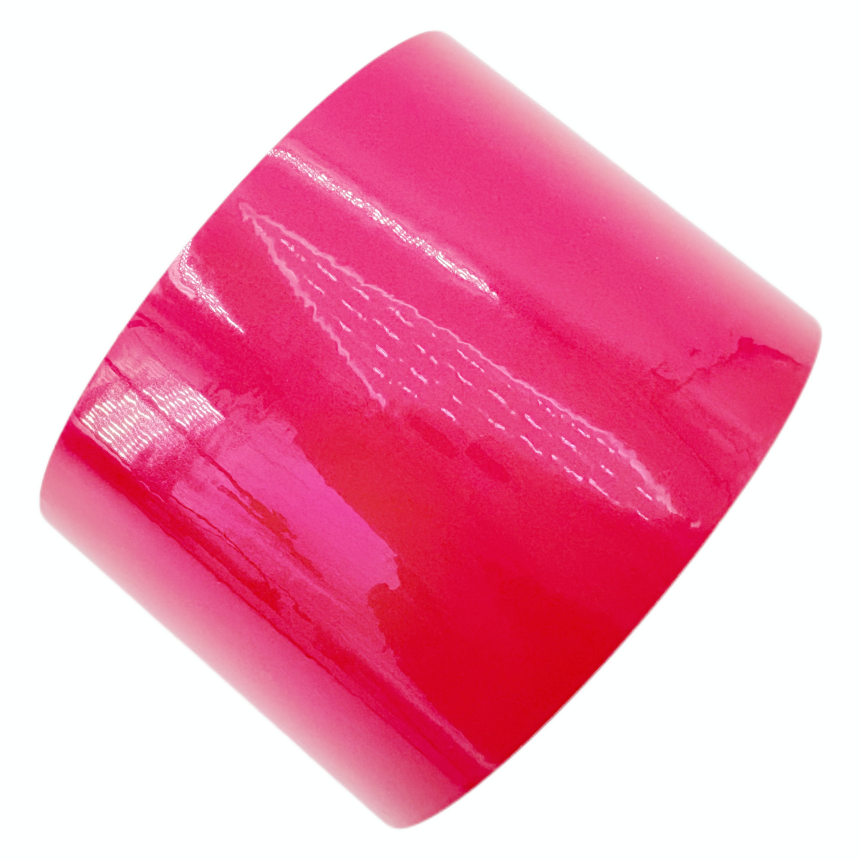
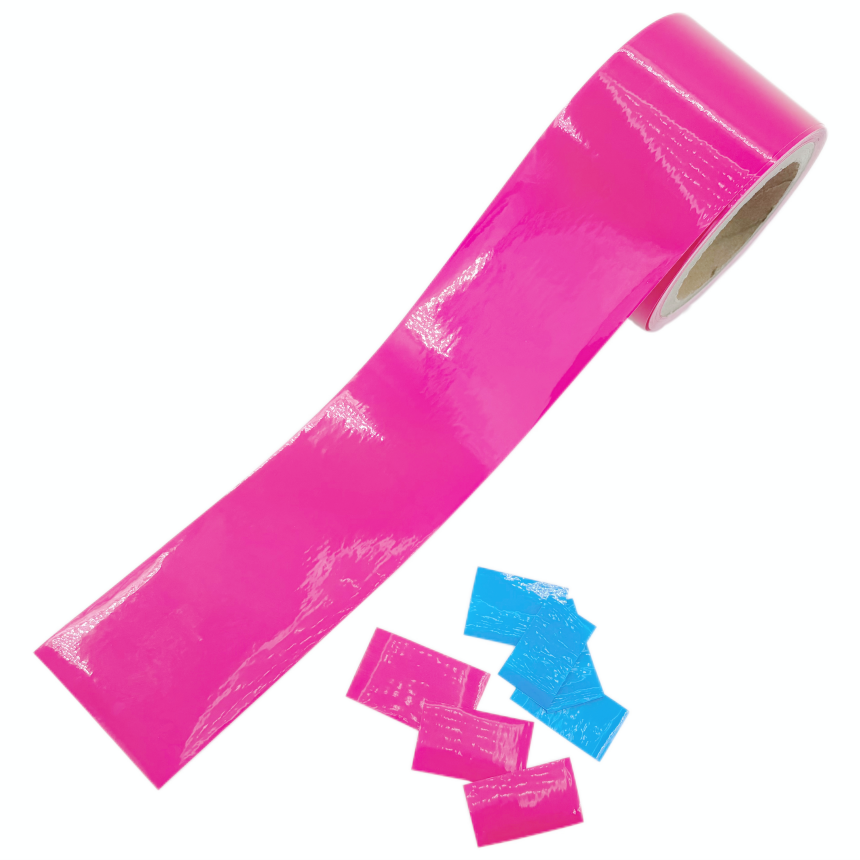
A Negative Transfer VOID Label is a tamper-evident security label designed to reveal a hidden VOID pattern when the label is removed.
The label normally appears intact after application. However, once someone attempts to lift or peel it away, the internal security layer separates according to a controlled pattern.
The result is visible evidence that the original seal has been disturbed.
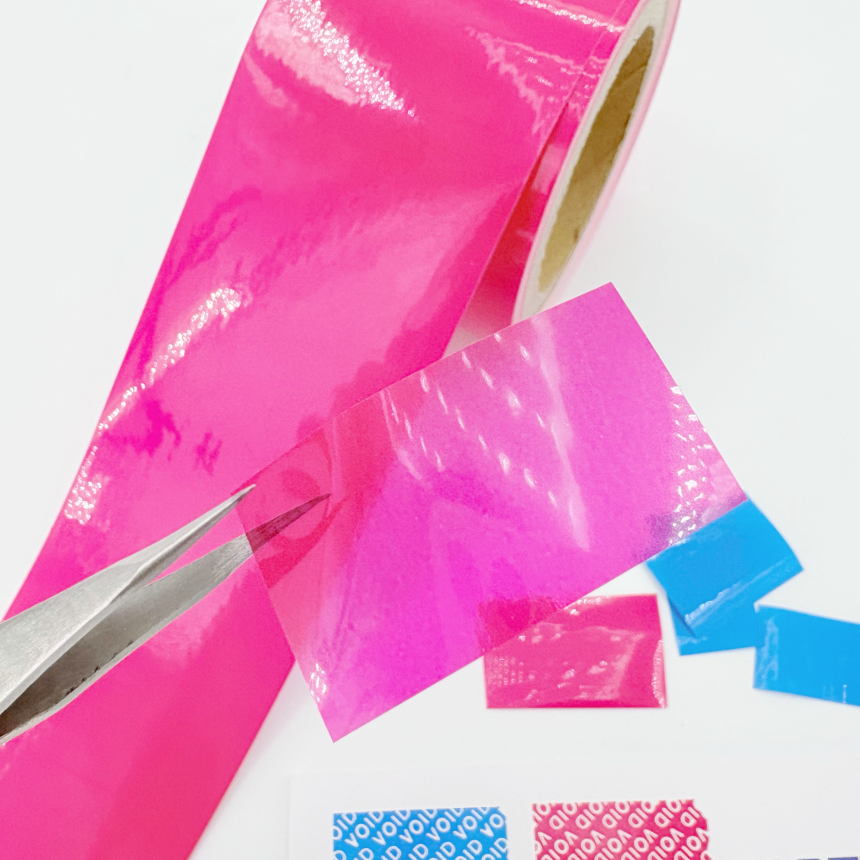
Depending on the specific material construction, the removed label and the application surface can display complementary positive and negative VOID patterns. This makes it difficult to remove and reapply the label without leaving clear evidence of tampering.
The hidden message does not have to be limited to the word VOID. Custom security patterns may include:
· VOID
· OPENED
· WARRANTY VOID
· Company name
· Brand logo
· Custom warning text
· Repeating security patterns
This type of label is commonly used when a normal label can be removed and reused without leaving evidence.
How Does a Negative Transfer VOID Label Work?
The tamper-evident effect is created through a specially engineered multi-layer construction.
A standard adhesive label normally consists of a face material, adhesive, and release liner. A VOID label adds a controlled separation layer that is designed to react when peeling force is applied.
The basic process works as follows:
1. The Label Is Applied Normally
Before removal, the security label looks like an ordinary label or seal.
It can contain printed information such as:
· Product information
· Serial numbers
· Barcodes
· QR codes
· Warranty information
· Company logos
· Security warnings
The hidden VOID pattern is not visible during normal use.
2. Someone Attempts to Remove the Label
When the edge of the label is lifted, peeling force causes the internal layers to separate.
The separation is intentionally engineered to occur at a specific layer within the label construction.
3. The Hidden VOID Pattern Is Revealed
As the label separates, the security pattern becomes visible.
The exact appearance depends on the VOID material construction. In a negative or partial transfer construction, the tamper pattern can create visible evidence on both the application surface and the removed label.
This means the label cannot simply be peeled off and applied again without showing signs of interference.
4. The Tamper Evidence Remains Permanent
Once activated, the original appearance of the label cannot be restored.
Even if someone attempts to reposition or reapply the label, the security pattern remains visible.
This provides a simple visual indication that the original seal has been opened, removed, or disturbed.
Negative Transfer vs. Full Transfer vs. Non-Transfer VOID Labels
Not all VOID labels produce the same tamper result.
The main difference is where the security pattern appears after removal.
VOID Label Type | Tamper Evidence After Removal | Best For |
Full Transfer VOID | The security layer transfers extensively to the application surface | Maximum visible tamper evidence |
Negative / Partial Transfer VOID | Complementary or partial VOID evidence can remain on both the surface and the removed label | Warranty seals, electronics, packaging and equipment |
Negative / Partial Transfer VOID | The VOID message appears on the label while the protected surface remains clean | Sensitive or high-value surfaces |
Destructible Label | The label breaks into fragments during removal | Applications where transfer residue is not required |
The right choice depends on one important question:
Where do you want the evidence of tampering to remain?
If the protected surface must clearly show that a label was removed, a transfer-type VOID label may be the better option.
If the surface must remain clean after removal, a non-transfer construction may be more suitable.
If you need tamper evidence on both the product and the removed label, a negative or partial transfer construction can provide an additional level of verification.
When Should You Choose Negative Transfer VOID Labels?
Negative Transfer VOID Labels are useful when security, warranty control, and traceability need to be combined.
Warranty Protection
Manufacturers often place VOID labels over screws, seams, access panels, or product housings.
If the customer opens the product, the label changes permanently.
This provides visible evidence that the original warranty seal has been broken.
Typical applications include:
· Electronics
· Power supplies
· Computer equipment
· Control units
· Industrial equipment
· Consumer appliances
Product Packaging Security
A VOID label can also be used as a security seal across product packaging.
When the package is opened, the label reveals evidence of interference.
This can help manufacturers identify:
· Unauthorized opening
· Product replacement
· Packaging tampering
· Unauthorized returns
· Counterfeit or repackaged products
Asset Identification
Companies often use tamper-evident labels to identify valuable assets.
The label can contain:
· Asset numbers
· Serial numbers
· Barcodes
· QR codes
· Company information
If someone attempts to remove or transfer the label to another asset, the VOID mechanism provides visible evidence.
Service and Maintenance Control
Negative Transfer VOID Labels can also be used to monitor access to equipment.
For example, a security label can be placed over an access point or enclosure.
Once opened, the tamper evidence confirms that the equipment has been accessed.
This is useful for:
· Equipment maintenance
· Calibration control
· Repair tracking
· Authorized service programs
· Internal security procedures
Choosing the Right Surface for VOID Labels
The performance of a tamper-evident label depends heavily on the application surface.
VOID labels generally perform best when the adhesive can create a stable bond with the substrate before removal is attempted.
Common application surfaces include:
· Metal
· Stainless steel
· Plastic
· ABS
· PET
· Powder-coated surfaces
· Glass
· Paperboard
· Smooth packaging materials
However, the same VOID material may produce different results on different substrates.
Surface factors that can affect the transfer result include:
· Surface energy
· Surface roughness
· Coatings
· Dust or oil
· Moisture
· Application temperature
· Storage time before removal
For this reason, it is important to test the label on the actual product surface before mass production.
A VOID effect that performs perfectly on smooth metal may behave differently on textured plastic or coated packaging.
How to Choose the Right Negative Transfer VOID Label
When selecting a tamper-evident label, do not choose the material based only on whether it can display the word VOID.
The entire application environment should be considered.
1. Application Surface
First, identify the material where the label will be applied.
Is it:
· Metal?
· Plastic?
· Glass?
· Painted?
· Powder coated?
· Cardboard?
· A low-energy plastic surface?
The adhesive system should be selected according to the substrate.
2. Required Tamper Effect
Decide what should happen when the label is removed.
Do you need:
· Maximum transfer onto the surface?
· Partial or complementary transfer?
· A negative VOID pattern?
· Tamper evidence on both surfaces?
· No residue on the protected product?
This is one of the most important factors when selecting the material construction.
3. Environmental Requirements
The label may be exposed to:
· Heat
· Humidity
· Low temperatures
· UV exposure
· Chemicals
· Abrasion
· Outdoor environments
The face material and adhesive should match the working environment.
PET-based materials are commonly selected for applications requiring better durability and dimensional stability than ordinary paper labels.
4. Printing Requirements
Many VOID labels also need identification information.
Depending on the application, the label can be customized with:
· Variable data
· Serial numbers
· Barcodes
· QR codes
· Logos
· Warning messages
· Batch numbers
For variable information, the printing method and ribbon compatibility should also be considered.
5. Label Size and Shape
The VOID mechanism can be incorporated into different label formats.
Common options include:
· Rectangular labels
· Round labels
· Long security strips
· Custom die-cut shapes
· Small warranty seals
· Large packaging seals
The label should be large enough to make the tamper pattern clearly visible after removal.
Common Problems When Using VOID Labels
Even high-quality VOID materials can fail to produce the expected effect if the application conditions are incorrect.
The VOID Pattern Does Not Transfer Clearly
This can happen when the application surface is contaminated with:
· Oil
· Dust
· Moisture
· Release agents
· Silicone residue
Always ensure that the application surface is clean and dry before applying the label.
The Label Is Removed Too Soon
The adhesive may require time to develop a stable bond with the substrate.
If the label is removed immediately after application, the transfer effect may be weaker than expected.
Testing should include the actual application time and storage conditions.
The Material Works Differently on Different Surfaces
VOID transfer is affected by the interaction between the adhesive system and the application surface.
A label tested on metal may not produce the same result on polypropylene, textured plastic, or coated cardboard.
Always test the final material on the actual product.
Printing Covers Important Security Areas
When custom printing is added, the design should not interfere with the visibility of the tamper effect.
For example, a heavy full-background print may make the activated VOID pattern more difficult to see.
The artwork should be designed together with the material structure.
Negative Transfer VOID Labels for Product Security
A tamper-evident label is not designed to physically prevent every attempt to open a product.
Its primary purpose is to provide clear evidence that tampering has occurred.
This distinction is important.
A determined person may still physically remove a label. However, the label is designed so that removal changes its appearance and makes unauthorized access visible.
Negative Transfer VOID Labels provide a practical solution for products that require:
· Warranty protection
· Tamper evidence
· Packaging security
· Asset identification
· Access control
· Traceability
The best label construction depends on the substrate, environment, desired transfer effect, and printing requirements.
For applications where the tamper evidence must be visible on both the protected surface and the removed label, a negative or partial transfer VOID construction can provide a more informative security result than a standard removable label.
Before mass production, testing the label on the actual application surface is recommended to confirm adhesion strength and VOID performance.
FAQ
Q: What is a Negative Transfer VOID Label?
A Negative Transfer VOID Label is a tamper-evident label that reveals a hidden security pattern when removal is attempted. Depending on the material construction, complementary VOID evidence can remain visible on the application surface and the removed label.
Q: Can I customize the VOID message?
Yes. The hidden security pattern can be customized with messages such as VOID, OPENED, WARRANTY VOID, a company name, or a custom logo.
Q: Will the VOID pattern work on every surface?
Not necessarily. The transfer result can vary depending on the substrate, surface coating, roughness, cleanliness, and application conditions. Testing on the actual product surface is recommended.
Q: Can Negative Transfer VOID Labels be printed?
Yes. The surface can be customized with logos, text, serial numbers, barcodes, QR codes, and other identification information.
Q: What is the difference between Negative Transfer and Non-Transfer VOID Labels?
A Negative or partial transfer construction is designed to leave visible tamper evidence through the separation of the label layers, potentially showing complementary evidence on the product surface and the removed label. A non-transfer VOID label is designed to reveal tampering within the label while leaving the protected surface clean.
Q: Can a removed VOID label be reused?
No. Once the VOID mechanism has been activated, the original appearance of the security label cannot be restored without visible evidence of tampering.
Q: Should I test the VOID label before placing a bulk order?
Yes. The actual VOID effect depends on the interaction between the label material, adhesive, application surface, and environmental conditions. Testing a sample on the final product is recommended before mass production.


