1. Introduction
Have you ever experienced cable labels that fade, peel off, or become unreadable after months of installation? In modern environments such as data centers, telecommunication networks, and industrial facilities, cable identification is not simply about attaching a sticker — it requires a reliable labeling solution that can withstand moisture, abrasion, chemicals, and daily handling.
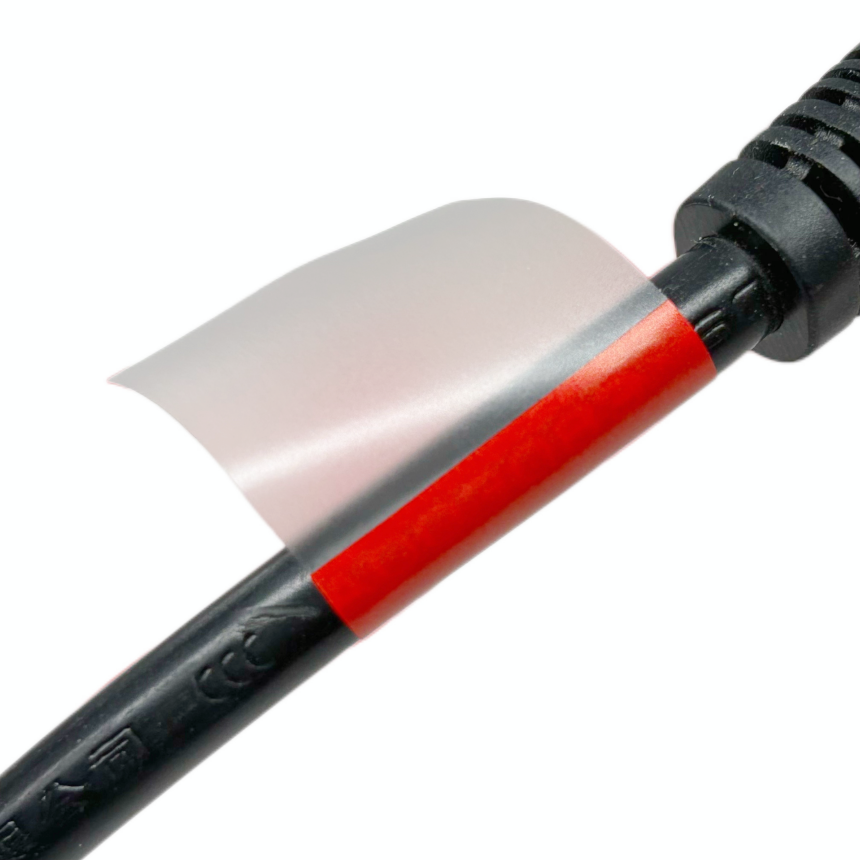
Self-laminating cable wrap labels are specifically designed to provide long-term identification for wires, cables, and network systems. Unlike ordinary adhesive labels, these labels combine a printable area with a transparent protective film that wraps around the cable, creating a durable protective barrier over printed information.
With excellent flexibility, strong adhesion, and environmental resistance, self-laminating cable wrap labels have become an essential identification solution for professional cable management systems.
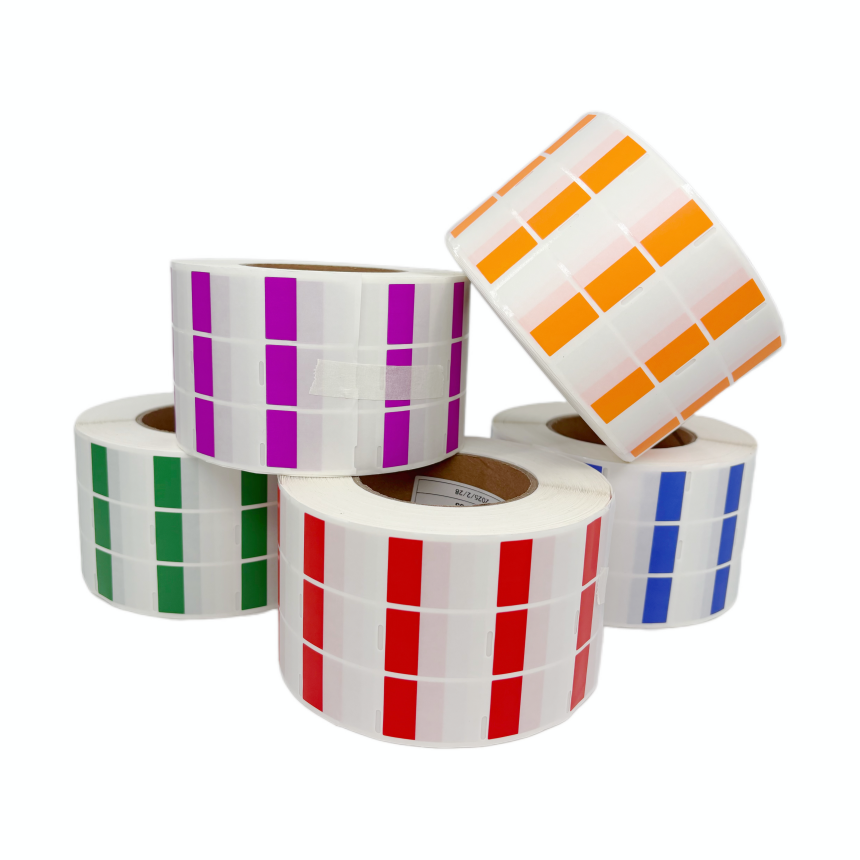
2. What Are Self-Laminating Cable Wrap Labels?
Self-laminating cable wrap labels are specialized identification labels designed for curved surfaces such as wires and cables.
The label structure normally consists of two functional areas:
1. Printable Area
The printable section allows users to add important identification information, including: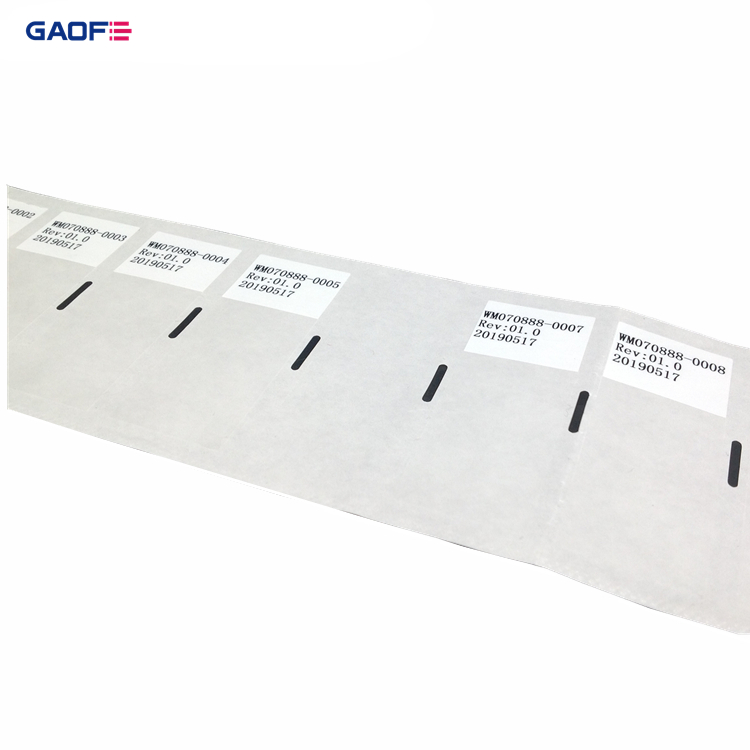
2. Transparent Protective Lamination Area
After printing, the transparent film section wraps around the cable and covers the printed area. This creates a self-laminating effect that protects the printed information from external damage.
This unique structure provides: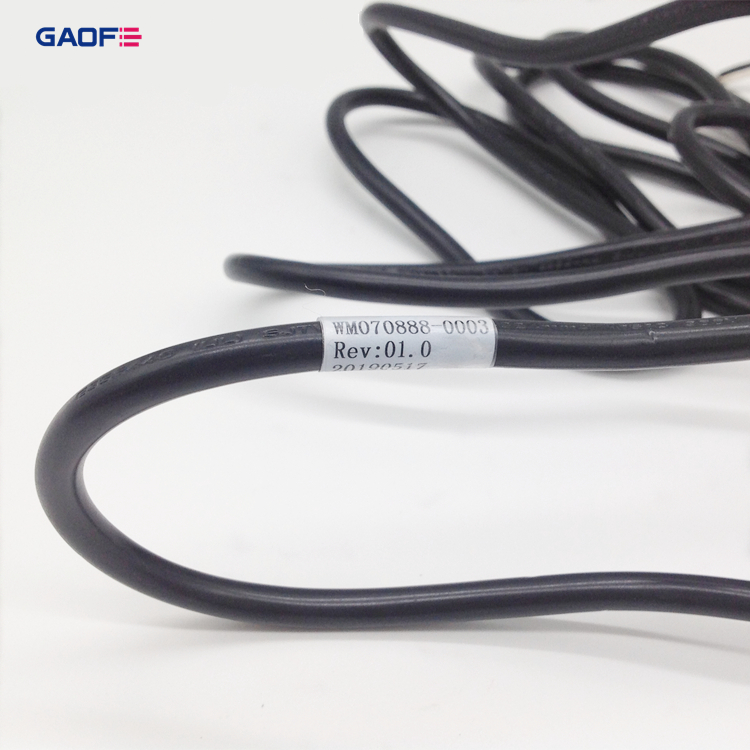
Long-lasting readability
Protection against abrasion
Resistance to moisture and contamination
Improved label durability compared with standard cable stickers
GAOFE B-674G cable wrap labels use a transparent vinyl film structure with a self-laminating design, allowing printed information to remain protected after application.
3. How Do Self-Laminating Cable Labels Work?
The working principle is simple but highly effective.
First, the required information is printed on the designated printable area using a thermal transfer printer.
Then, the label is wrapped around the cable. The extended transparent film covers the printed section, forming a protective layer.
After application:
The printed information is sealed under the transparent film
The label conforms tightly to the cable surface
The identification remains visible during long-term use
This design prevents common problems found in traditional labels, such as:
Ink fading
Scratching
Water damage
Label peeling
Barcode scanning failure
4. Key Advantages of Self-Laminating Cable Wrap Labels
Excellent Water and Moisture Resistance
Cable systems are often installed in environments where exposure to humidity, dust, and liquids is unavoidable.
The transparent laminated layer protects printed information from:
This makes self-laminating cable labels suitable for both indoor and demanding industrial applications.
Superior Abrasion Resistance
Cables are frequently pulled, adjusted, and maintained during installation and operation.
Ordinary paper labels can easily become damaged due to friction.
The protective laminate layer helps prevent:
This ensures technicians can quickly identify cables even after years of service.
Flexible Design for Different Cable Diameters
Unlike rigid identification tags, vinyl wrap labels are flexible and can conform closely to curved cable surfaces.
They are suitable for: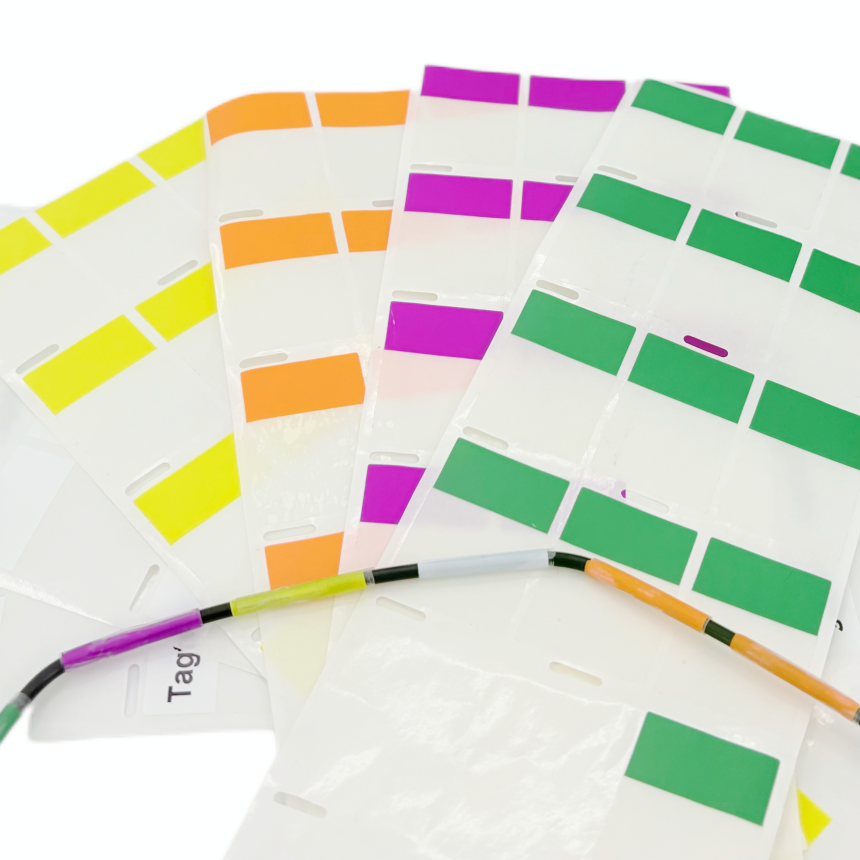
Network cables
Ethernet cables
Fiber optic cables
Electrical wires
Control system cables
The flexible structure helps prevent curling or lifting after installation.
Strong Adhesion for Long-Term Identification
Reliable adhesion is critical for cable management systems.
Self-laminating cable labels are designed with industrial-grade adhesive that helps maintain secure bonding on common cable surfaces, including:
PVC cable jackets
Plastic insulation
Rubber-coated wires
This reduces the need for frequent replacement and maintenance.
5. Applications of Self-Laminating Cable Wrap Labels
Because of their durability and professional appearance, cable wrap labels are widely used in many industries.
| Industry | Common Applications |
| Data Centers | Server racks, Ethernet cables, patch panels |
| Telecommunications | Fiber optic networks, communication equipment |
| Industrial Automation | PLC wiring, control cabinets, machine cables |
| Electrical Systems | Power cables and electrical identification |
| Security Systems | CCTV wiring and access control cables |
| Automotive | Wire harness identification |
| Office Networks | LAN cable organization and maintenance |
For modern infrastructure projects, clear cable identification improves installation efficiency, troubleshooting speed, and system reliability.
6. Why Cable Identification Is Important for Data Centers and Network Systems
A large data center may contain thousands of cables connecting servers, switches, and communication equipment.
Without proper identification:
Maintenance becomes time-consuming
Troubleshooting errors increase
Cable replacement becomes difficult
System downtime risks become higher
Professional cable labeling provides:
Faster Maintenance
Technicians can quickly locate the correct cable without manually tracing connections.
Better Organization
A standardized labeling system improves cable management and documentation.
Improved Asset Tracking
Barcode and QR code printing allows cables and connected equipment to be tracked digitally.
7. Printing Solutions for Self-Laminating Cable Labels
To achieve long-lasting print performance, choosing the correct printing equipment is essential.
Recommended Thermal Transfer Ribbon
TR4510B Resin Ribbon
Resin ribbons are recommended for self-laminating vinyl labels because they provide:
Recommended Label Printers
CAB EOS2 Industrial Label Printer
Suitable for professional cable identification applications requiring reliable printing performance.
CAB SQUIX4 Industrial Label Printer
Designed for industrial environments requiring high precision and stable printing.
Other compatible printers include:
GAOFE provides complete labeling solutions, including cable labels, thermal transfer ribbons, and compatible barcode printers.
8. How to Choose the Right Cable Wrap Label
Before selecting cable wrap labels, consider the following factors:
Cable Diameter
The label size should match the cable diameter to ensure sufficient wrapping area.
Printing Information
Consider whether you need:
Application Environment
Different environments require different material solutions.
Consider:
GAOFE can provide customized cable wrap labels according to your application requirements.
9. Why Choose GAOFE Cable Wrap Labels?
With years of experience in barcode identification solutions, GAOFE provides customized labeling solutions for industrial and commercial applications.
Our advantages include:
Customized Sizes and Designs
We support:
Complete Barcode Solution
GAOFE supplies:
Customers can receive a complete labeling system from one professional supplier.
Application-Based Recommendations
Instead of providing only labels, GAOFE helps customers select suitable materials, adhesives, ribbons, and printers based on their actual working environment.
10. Conclusion
Self-laminating cable wrap labels provide a reliable and professional solution for wire and cable identification.
Their flexible structure, protective transparent laminate, strong adhesion, and durable printing performance make them ideal for data centers, telecommunications, industrial automation, and electrical systems.
For companies that require accurate cable management and long-term identification, choosing the right cable label can significantly improve efficiency, reduce maintenance costs, and prevent identification errors.
GAOFE provides customized self-laminating cable wrap labels and complete barcode printing solutions to help businesses build reliable identification systems.
Contact GAOFE today for professional cable labeling solutions and sample testing.
Frequently Asked Questions (FAQ)
Q1: What is a self-laminating cable label?
A: A self-laminating cable label is a wrap-around label with a printable area and a transparent protective film. After application, the transparent film covers the printed information to protect it from damage.
Q2: What materials are used for cable wrap labels?
A: Cable wrap labels are commonly made from durable synthetic materials such as vinyl films, which provide flexibility, moisture resistance, and abrasion resistance.
Q3: Can cable wrap labels be printed with barcodes?
A: Yes. Cable wrap labels can be printed with barcodes, QR codes, serial numbers, and other identification information using thermal transfer printers.
Q4: Which ribbon should be used for cable wrap labels?
A: Resin thermal transfer ribbons are recommended because they provide excellent durability, abrasion resistance, and chemical resistance.
Q5: Can GAOFE customize cable wrap labels?
A: Yes. GAOFE provides customized cable labels based on different sizes, materials, printing requirements, and application environments.


