Introduction
Barcode labels are essential for inventory management, logistics tracking, retail operations, manufacturing, and asset identification. When choosing barcode labels, many businesses face a common question:
Should I use Thermal Transfer Labels or Direct Thermal Labels?
Although both label types are widely used for barcode printing, they differ significantly in printing technology, durability, cost, and application scenarios.
In this guide, we will compare Thermal Transfer Labels and Direct Thermal Labels in detail, helping you choose the best solution for your business needs.
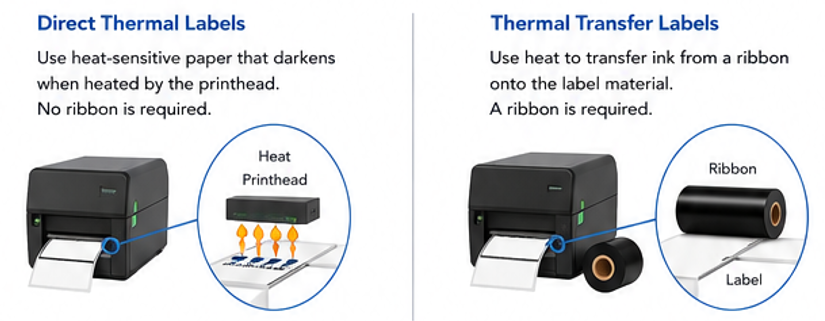
What Are Direct Thermal Labels?
Direct Thermal Labels are made from heat-sensitive materials. When the printer's printhead applies heat to the label surface, the label darkens and forms text, barcodes, or graphics.
No ribbon is required during printing.
Advantages of Direct Thermal Labels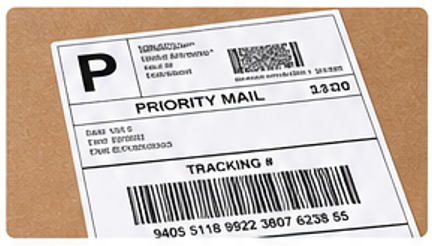
Limitations of Direct Thermal Labels
Sensitive to heat and sunlight
Print may fade over time
Not suitable for harsh environments
Shorter lifespan compared to thermal transfer labels
Common Applications
What Are Thermal Transfer Labels?
Thermal Transfer Labels use a thermal transfer ribbon during printing. The printer heats the ribbon, transferring ink onto the label surface.
This process creates highly durable and long-lasting prints.
Advantages of Thermal Transfer Labels
Excellent print durability
Resistant to heat, chemicals, moisture, and abrasion
Suitable for outdoor use
Long-term barcode readability
Compatible with a wide range of label materials
Limitations of Thermal Transfer Labels
Common Applications
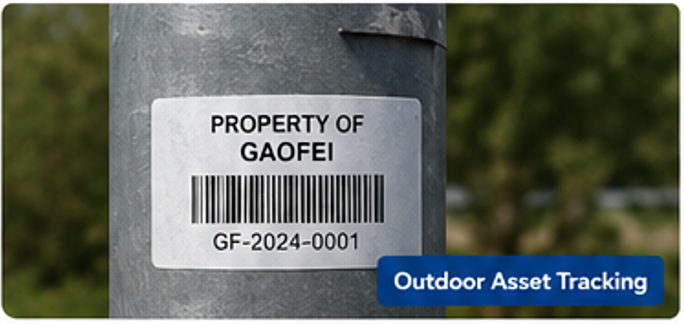
Thermal Transfer Labels vs Direct Thermal Labels: Key Differences
| Feature | Direct Thermal Labels | Thermal Transfer Labels |
| Printing Method | Heat directly on label surface | Ribbon transfers ink onto label |
| Ribbon Required | No | Yes |
| Initial Cost | Lower | Higher |
| Print Durability | Short-term | Long-term |
| Heat Resistance | Low | High |
| Chemical Resistance | Low | High |
| Outdoor Use | Not Recommended | Recommended |
| Label Lifespan | Months | Years |
| Best For | Shipping & Retail | Industrial & Asset Tracking |
Which Industries Use Direct Thermal Labels?
Direct Thermal Labels are ideal when labels are used for a short period and do not need long-term durability.
Logistics & Shipping
Courier companies often use direct thermal labels because packages typically reach their destination within days.
Retail
Price tags and shelf labels are frequently printed using direct thermal technology.
Healthcare
Patient identification labels and specimen labels often use direct thermal printing for short-term tracking.
Food & Beverage
Temporary inventory labels and expiration date labels are common applications.
Which Industries Use Thermal Transfer Labels?
Thermal Transfer Labels are preferred when durability and barcode readability are critical.
Manufacturing
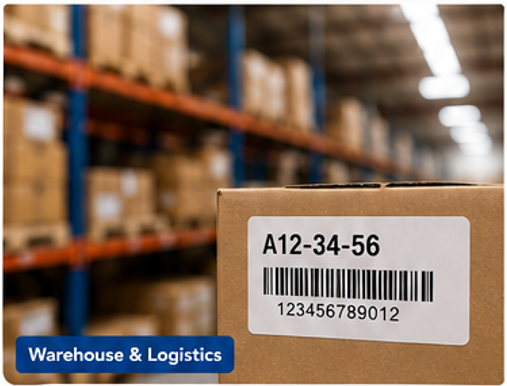
Manufacturers use thermal transfer labels for product tracking and work-in-process identification.
Electronics Industry
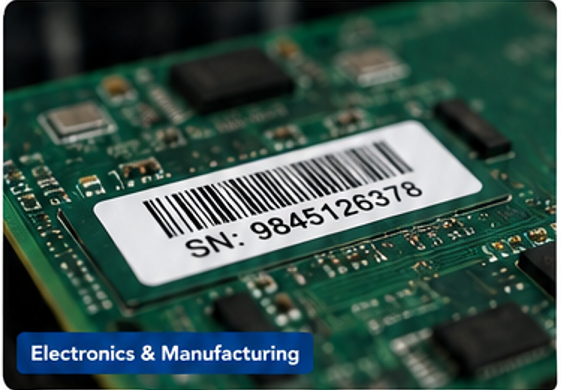
Product serial number labels must remain readable throughout the product lifecycle.
Chemical Industry
Labels on chemical containers require resistance to moisture, chemicals, and abrasion.
Asset Tracking
Fixed assets often require labels that remain readable for years.
Outdoor Applications
Equipment exposed to sunlight and weather conditions requires highly durable labels.
How to Choose the Right Label?
Choose Direct Thermal Labels if:
✓ Your labels are used for less than 6 months
✓ Cost is your primary concern
✓ Labels are stored indoors
✓ You need high-volume shipping labels
✓ Ribbon-free printing is preferred
Choose Thermal Transfer Labels if:
✓ Labels must last several years
✓ Products are exposed to heat or chemicals
✓ Labels will be used outdoors
✓ Barcode readability is critical
✓ You need asset tracking or compliance labeling
Cost Comparison
Many buyers focus only on initial cost.
Direct Thermal Labels generally have lower upfront costs because no ribbon is required.
However, Thermal Transfer Labels often provide better long-term value because they reduce barcode failures, relabeling costs, and scanning errors.
For applications requiring long-term identification, Thermal Transfer Labels are usually the more economical choice over time.
Why More Industrial Companies Prefer Thermal Transfer Labels
As industries move toward digital traceability and automated inventory management, barcode quality becomes increasingly important.
Thermal Transfer Labels offer:
Superior barcode clarity
Long-term durability
Better resistance to environmental factors
Reduced risk of data loss
Improved operational efficiency
For manufacturing, automotive, electronics, steel, chemical, and asset management industries, Thermal Transfer Labels are generally the preferred solution.
Conclusion
There is no single "best" choice between Thermal Transfer Labels and Direct Thermal Labels.
The right option depends on your application, environment, durability requirements, and budget.
If your labels are used for short-term logistics or retail applications, Direct Thermal Labels provide a cost-effective solution.
If you need long-lasting identification, industrial durability, and reliable barcode scanning, Thermal Transfer Labels are the better investment.
At Dongguan Gaofei Electronic Technology Co., Ltd., we provide a wide range of barcode labels, thermal transfer ribbons, and barcode printing solutions for logistics, manufacturing, healthcare, retail, and industrial applications worldwide.
Need Help Choosing the Right Barcode Label?
Contact our team today for free samples and professional recommendations tailored to your specific application.


