Introduction
Have you ever wondered if your product's packaging is truly secure? In this article, we will dive into the differences between tamper evident and tamper proof solutions. You’ll learn how tamper evident labels can help you detect tampering and ensure product safety.
What are Tamper Evident Labels?
Definition and Purpose
Tamper evident labels are designed to help businesses protect their products by indicating if a package has been tampered with. The main purpose of these labels is to provide visible evidence of unauthorized access. By utilizing specific materials or features, these labels ensure that any attempt to tamper with the product will leave an obvious mark or sign that the packaging has been altered.
When tamper evident labels are applied, they work by showing clear signs such as broken seals, altered markings, or even changing patterns that can’t be reversed. This makes tamper evident labels an essential tool for protecting a wide range of products, from food and beverages to electronics and pharmaceuticals.
How Tamper Evident Labels Work:
The working mechanism behind tamper evident labels is based on unique features and materials that react when tampered with. Let's break down the most common ways these labels function:
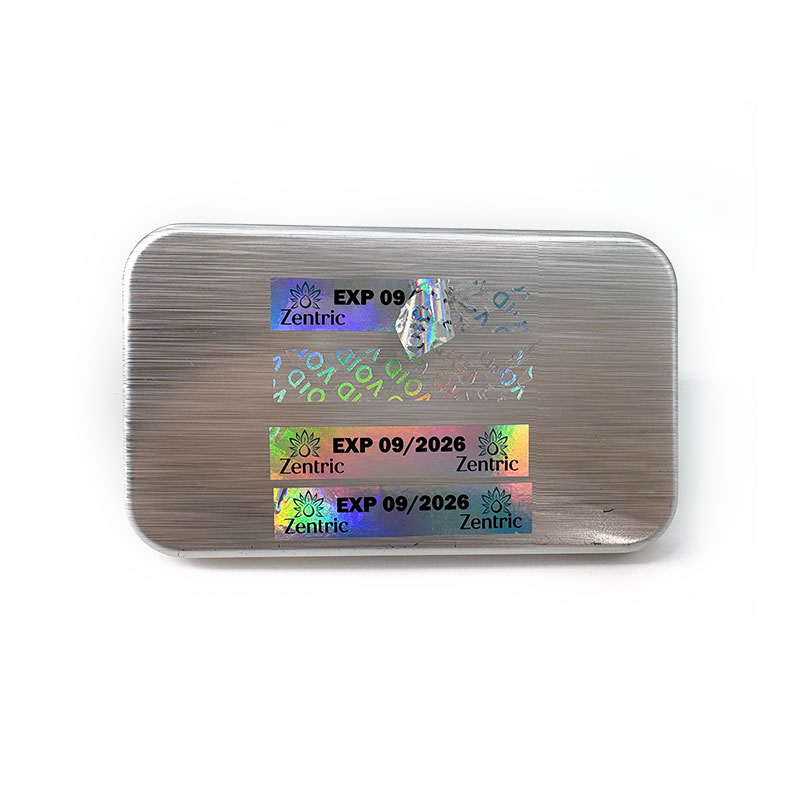
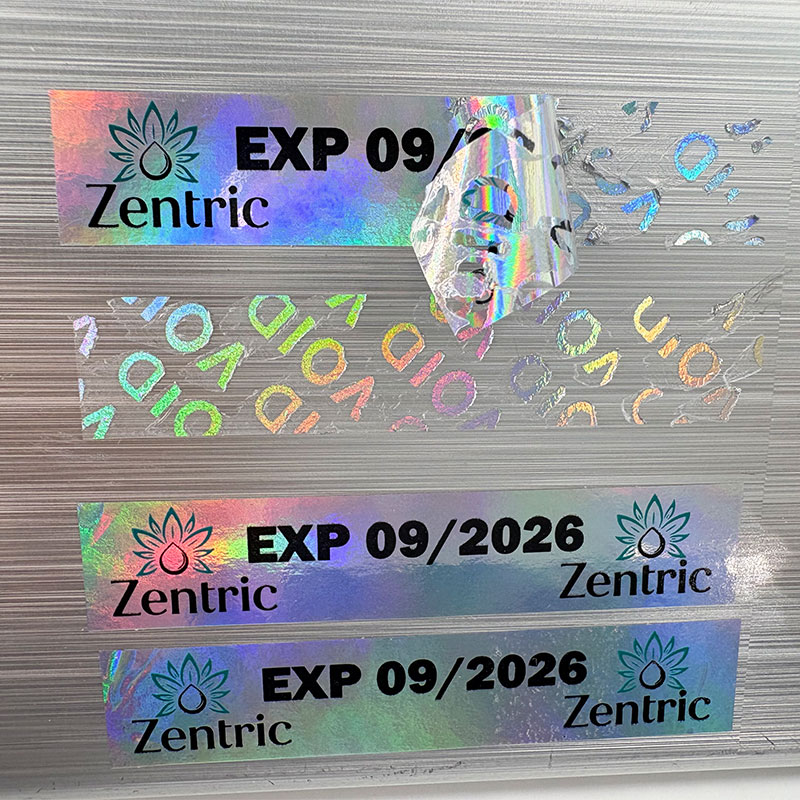
● Void Patterns: When the label is removed, a hidden pattern or message like "VOID" appears, indicating that tampering has occurred. This method is highly visible and leaves a clear trace.
● Destructible Labels: These labels break into pieces or shatter when someone tries to remove them. Their fragility ensures that they cannot be reapplied without showing signs of damage.
● Holographic Features: Tamper evident labels may include holographic effects that distort or degrade upon tampering. These are often used in high-security products like luxury goods or pharmaceuticals to enhance security.
How do Tamper Evident Labels Indicate Tampering?
Tamper evident labels provide a range of indicators to show if the packaging has been compromised. Each type of indicator serves a specific purpose in preventing tampering, and companies choose the type based on the security needs of their products.
Type of Indicator | How It Works | Common Uses |
Void Message (e.g., VOID) | Reveals a hidden message when label is removed. | Common in retail and shipping |
Destructible Labels | Breaks apart upon removal, leaving pieces behind. | Used for electronics and warranties |
Holographic Features | Features such as holograms degrade or distort on tampering. | Ideal for high-value and pharmaceuticals |
These tamper evident features serve different industries by ensuring visible signs of tampering, which directly impacts customer trust. Whether you're dealing with consumer electronics, medicine, or food packaging, tamper evident labels offer a crucial solution for protecting the integrity of your products.
Why Tamper Evident Labels Are Crucial:
For businesses, tamper evident labels are not just about protecting products but also ensuring compliance with regulations and maintaining brand reputation. In sectors like pharmaceuticals, tamper evident labels provide mandatory compliance with safety standards, while in retail, they help prevent theft and counterfeiting.
These labels offer a simple but effective way to monitor product safety, ultimately leading to better consumer experiences and brand loyalty. By integrating tamper evident labels into your product packaging, you are taking a step toward securing your brand and ensuring that your customers receive products that are safe and untampered with.
Types of Tamper Evident Labels
Tamper evident labels come in different types, each designed to serve a specific purpose when it comes to detecting tampering. These labels help ensure that customers are alerted immediately if a product has been opened or altered. Let’s explore the different types and how they function:
● Non-transfer VOID Security Labels
These labels feature hidden messages or patterns that appear when removed. Once someone attempts to peel off the label, it reveals a "VOID" message, which clearly shows that the product has been tampered with. These types of labels are commonly used in retail and shipping industries to ensure product integrity during transit.
● Destructible and Fragile Labels
These labels are designed to break apart when tampered with, making it impossible to remove the label without causing visible damage. This feature ensures that any attempt to access the product will leave clear evidence of tampering. They are commonly used for electronics, warranties, and high-value items where security is crucial.
● Holographic and Tamper-Indicating Labels
Incorporating holographic effects into tamper evident labels makes it difficult for counterfeiters to replicate. When these labels are tampered with, the holographic design becomes distorted or damaged, providing a visible sign of tampering. These labels are commonly used in luxury goods and pharmaceutical packaging, where counterfeit protection is essential.
Industries that Use Tamper Evident Labels
Tamper evident labels are not limited to a single industry. Their application spans across multiple sectors where protecting product integrity is crucial. Below are a few industries where these labels are commonly used:
● Food and Beverage
Tamper evident labels are essential in the food and beverage industry to ensure product safety. These labels provide a clear indication that the product hasn’t been opened or tampered with, offering reassurance to consumers. For example, beverages, snacks, and pharmaceutical-grade packaging often use tamper evident seals to meet health and safety regulations.
● Pharmaceuticals and Healthcare
In the pharmaceutical and healthcare industries, tamper evident packaging is a critical safety feature. It ensures that medications, healthcare products, and medical devices arrive in a tamper-free state. These labels help protect patients by ensuring that the products they use haven’t been altered or compromised. With the rise of counterfeit medications, tamper evident labels are becoming a mandatory standard in this field.
● Electronics and Consumer Goods
In the electronics and consumer goods sectors, tamper evident labels are often used to secure high-value items. For example, smartphones, laptops, and gaming consoles may feature tamper evident seals to deter theft, prevent unauthorized access, and verify the product’s authenticity. In many cases, these labels are applied to product boxes or outer packaging to deter tampering during transit or retail display.
By incorporating tamper evident labels, industries not only ensure product security but also demonstrate their commitment to customer safety and trust. Whether it's protecting food items or medical devices, these labels provide an effective solution to ensure that products reach consumers in their original, untampered state.
What are Tamper Proof Solutions?
Definition and Purpose
Tamper proof solutions are designed with the sole purpose of preventing unauthorized access to products. These solutions make it extremely difficult, if not impossible, to access the product without leaving visible evidence of tampering. While tamper evident labels focus on revealing tampering after it occurs, tamper proof systems aim to stop tampering altogether.
The primary goal of tamper proof packaging is to secure the product in a way that makes it difficult to open or alter without tools. The effectiveness of these solutions is evident in industries where high-security protection is essential. These can include electronics, pharmaceuticals, and high-value items.
Key Features of Tamper Proof Packaging:
● Seal Locks and Special Closures: These are locks or closures that are designed to prevent the product from being opened without leaving damage.
● Reinforced Packaging: Stronger packaging materials are used to ensure that it can't be opened or altered easily.
● Tamper Proof Tapes and Shrink Wraps: These seals, when broken, clearly indicate tampering.
Feature | Function | Common Uses |
Seal Locks | Prevents access without using special tools or breaking the lock. | Electronics, high-value goods |
Reinforced Closures | Strong materials that resist tampering and can’t be resealed. | Industrial equipment |
Tamper Proof Tape | Tapes that can’t be removed without showing clear damage. | Pharmaceuticals, food packaging |
When to Use Tamper Proof Solutions
High-value Products
Tamper proof solutions are essential for protecting expensive and high-value products. These products are often targeted by thieves or counterfeiters, so a highly secure packaging system is needed. For example, luxury items, such as watches, smartphones, and high-end electronics, often feature tamper proof seals to make sure no one can access them without being noticed.
● Why are tamper proof solutions crucial for these products?
○ Protection against theft: The high cost and desirability of these products make them prime targets for theft.
○ Prevention of counterfeit: Tamper proof solutions make it difficult for counterfeiters to tamper with the product and resell it as genuine.
Sensitive Items Requiring High Security
Tamper proof solutions are also used for sensitive items that require extra layers of security. These include items in government, military, or industrial sectors where tampering could lead to serious consequences. For example, military equipment, nuclear materials, or classified documents require packaging that not only prevents unauthorized access but also makes it easy to detect any tampering attempts.
By using tamper proof packaging, companies can ensure that their most valuable, sensitive, or crucial items remain safe from tampering, theft, or contamination. Whether it’s for consumer electronics or government materials, tamper proof solutions help maintain the integrity and security of products, making them vital in a wide range of sectors.
Key Differences Between Tamper Evident and Tamper Proof
Purpose
The primary goal of both tamper evident and tamper proof packaging is to protect products, but they do so in very different ways. Understanding the distinct purpose behind each can help you choose the right solution for your needs.
● Tamper Evident: These solutions are designed to reveal whether tampering has occurred. If a product’s packaging is compromised, tamper evident labels show visible signs of damage, such as void messages, broken seals, or shattered labels. The focus here is on detection, ensuring that tampering is easily identifiable.
● Tamper Proof: In contrast, tamper proof solutions aim to prevent tampering entirely. These solutions are much more about physical security than detection. They make it difficult or nearly impossible to access a product without leaving clear, irreversible evidence that tampering has occurred.
Cost and Application
When deciding between tamper evident and tamper proof solutions, cost and application play key roles in determining the best option.
● Which is more cost-effective?
○ Tamper evident solutions are typically more affordable. The technology and materials involved, like pressure-sensitive adhesive and simple holographic patterns, are less costly than the specialized hardware used for tamper proof systems.
○ Tamper proof solutions, due to the need for custom locks, reinforced packaging, and special materials, tend to be more expensive. This higher cost is often justified for high-risk or high-value products that require top-tier security.
● Which solution is more practical for consumer products?
○ Tamper evident labels are the preferred choice for most retail consumer products, such as food, beverages, and electronics. These products benefit from the ability to easily detect tampering while keeping packaging costs manageable.
○ Tamper proof packaging, on the other hand, is generally used for high-value or sensitive items, like luxury goods, pharmaceuticals, or electronics requiring extra security.
Ease of Use and Consumer Access
The ease with which a consumer can access a product plays a significant role in the packaging choice. When comparing tamper evident and tamper proof, consumer experience is an important consideration.
● How easy is it to remove tamper evident vs. tamper proof packaging?
○ Tamper evident packaging is easier to remove because it is primarily focused on indicating tampering. This type of packaging may feature simple seals that can be broken or labels that peel off, but will leave a clear sign that tampering has occurred.
○ Tamper proof packaging, however, is designed to be difficult to open without special tools or destructive force. It often involves reinforced seals, lock closures, or shrink wraps that prevent easy removal. While these solutions are more secure, they can make it harder for consumers to access the product without effort.
Packaging Solution | Cost | Best Use Cases |
Tamper Evident | Lower cost, affordable options. | Consumer goods, food, electronics. |
Tamper Proof | Higher cost due to advanced features. | High-value, sensitive, or critical items. |
How to Choose the Right Packaging Solution for Your Product
Factors to Consider
Choosing between tamper evident and tamper proof solutions depends on several factors. Here’s what you need to think about:
● Product Type: Consider what you are packaging. For everyday consumer products like snacks or toiletries, tamper evident is sufficient. But for luxury goods or pharmaceuticals, tamper proof packaging might be more appropriate.
● Value of the Product: Higher-value items often require tamper proof solutions due to the need for greater security. Lower-cost consumer products can use tamper evident labels effectively.
● Regulatory Requirements: Some industries, such as pharmaceuticals and food packaging, have strict regulations that may require either tamper evident or tamper proof solutions to comply with safety standards.
Combining Tamper Evident and Tamper Proof Solutions
In some cases, a combination of both tamper evident and tamper proof packaging might be necessary for maximum protection.
● Why use both?
Some businesses choose to use tamper proof packaging for physical security and tamper evident labels for easy detection of tampering. This two-layer approach provides the highest level of security and consumer confidence.
This combination ensures that sensitive products stay protected and that consumers can easily spot any attempts at tampering. It enhances both security and trust, offering comprehensive protection.
Conclusion
Tamper evident and tamper proof packaging solutions serve distinct purposes. Tamper evident labels focus on revealing any tampering attempts, while tamper proof solutions aim to prevent tampering altogether. GAOFE offers high-quality tamper evident labels designed to provide visible security signs, ideal for various industries like food, pharmaceuticals, and electronics. Their solutions help businesses enhance product integrity and build consumer trust.
FAQ
Q: What is the difference between tamper evident and tamper proof packaging?
A: Tamper evident packaging shows signs of tampering, while tamper proof packaging prevents tampering entirely.
Q: How do tamper evident labels work?
A: Tamper evident labels leave visible marks, like void messages or broken seals, when tampered with.
Q: Why should I use tamper evident labels?
A: They help detect unauthorized access and ensure product integrity for consumer confidence.
Q: Can tamper evident and tamper proof solutions be used together?
A: Yes, combining both ensures maximum protection and security for sensitive products.
Q: Which industries use tamper evident labels?
A: Industries like food, pharmaceuticals, and electronics use tamper evident labels to protect products and comply with regulations.


