Ever wonder how stores manage inventory so efficiently? Barcode labels are the key. These tiny labels revolutionized tracking since their 1970s debut. In modern industries, they ensure accuracy and speed. In this post, you'll learn what barcode labels are, their history, and their crucial role today.
Types of Barcode Labels
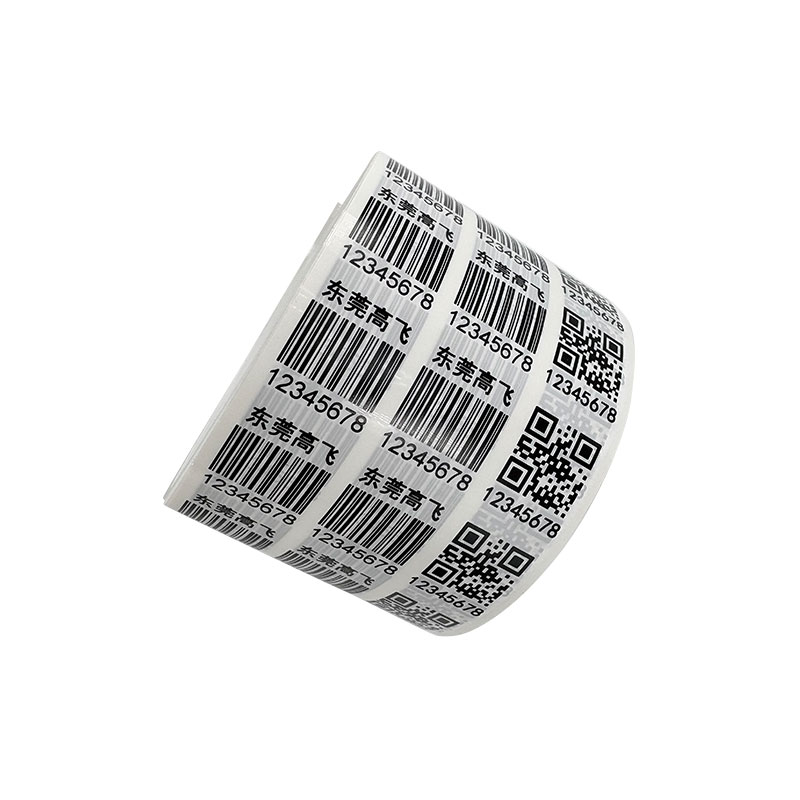
Barcode labels come in many types, each designed for specific uses and environments. Choosing the right type ensures your barcodes last long and stay readable. Here’s a detailed look at common barcode label types:
Paper Barcode Labels
The most common type, paper barcode labels are cost-effective and versatile. They work well for retail, shipping, and inventory tasks. However, paper is sensitive to moisture, abrasion, and chemicals, making it less ideal for harsh or long-term use.
Polyester Barcode Labels
Made from durable polyester, these labels resist water, oils, and chemicals. They tolerate temperature changes and don’t shrink or expand much. Ideal for industrial settings, asset tracking, and outdoor use.
Vinyl Barcode Labels
Vinyl labels stick well to curved or uneven surfaces. They resist water, UV rays, and chemicals, making them perfect for outdoor applications like vehicle parts, machinery, and signage.
Thermal Transfer Barcode Labels
These labels use a ribbon to transfer ink onto the label surface. The result is a sharp, long-lasting print that withstands heat, chemicals, and abrasion. They’re common in warehouses, healthcare, and logistics.
Direct Thermal Barcode Labels
Direct thermal labels don’t need ribbons. They react to heat from the printer to create the barcode. They’re great for short-term uses like shipping labels or receipts, but they fade faster when exposed to heat or sunlight.
Polypropylene Barcode Labels
Polypropylene labels resist water, oil, and chemicals. They’re tough and flexible, often used in food packaging, pharmaceuticals, and chemical labeling.
Resin-Enhanced Barcode Labels
These combine resin with other materials to create extremely durable labels. They resist harsh chemicals, high temperatures, and rough environments. Common in industrial and hazardous material labeling.
Security Barcode Labels
Security labels help prevent theft and tampering. They often use destructible materials that leave a mark or residue if removed. Used for high-value items, pharmaceuticals, and anti-counterfeit packaging.
QR Code Labels
QR codes store more data than traditional barcodes and can be scanned by smartphones. They’re used for marketing, product tracking, and digital engagement, linking consumers to websites or additional info.
Tip: Match label material to your environment—use thermal transfer labels for durability and direct thermal for short-term needs—to ensure barcode longevity and readability.
How Barcode Labels Work
Barcode labels are more than just lines and numbers. They carry important data encoded in a way that machines can read quickly and accurately. Understanding how these labels work helps businesses use them effectively.
Design and Information Encoding
Each barcode label starts with a design that encodes specific information. This information can be a product ID, batch number, expiry date, or shipping details. The data is transformed into patterns of bars and spaces. The width and spacing of these bars represent different numbers or characters. This encoding makes it possible for scanners to interpret the data instantly.
Different barcode types use different encoding methods. For example, traditional 1D barcodes use lines of varying thickness and gaps, while QR codes use a matrix of black and white squares. The design ensures the data is compact yet readable.
Printing Process
Once the barcode design is ready, it is printed onto labels using specialized printers. Two common printing methods are thermal transfer and direct thermal printing:
Thermal Transfer Printing: Uses a ribbon to transfer ink onto the label surface. It produces sharp, durable barcodes that resist heat, chemicals, and abrasion. Ideal for long-lasting labels in harsh environments.
Direct Thermal Printing: Prints directly on heat-sensitive paper. It’s fast and cost-effective but less durable, as the print can fade with exposure to heat or sunlight. Best for short-term uses like shipping labels.
The choice of printing process depends on the label's intended use and environment.
Optical Reading Devices
Barcode scanning involves optical readers that decode the barcode’s pattern into usable data. There are two main types:
Laser Scanners: Emit a laser beam that moves across the barcode. The scanner detects reflected light from the bars and spaces, converting it to digital data. Best for 1D barcodes.
Imagers (Camera-based Scanners): Capture an image of the barcode and use software to decode it. Can read both 1D and 2D barcodes like QR codes. More versatile and common in smartphones.
The scanner sends the decoded information to a computer system, which then uses it for inventory, sales, or tracking.
Tip: Ensure barcode labels have high contrast and are printed with precise dimensions to maximize scanner readability and reduce errors during scanning.
The number of digits in a barcode varies by standard.
The number of digits in a barcode varies depending on the barcode standard being used. There are four major barcode types commonly seen worldwide:
EAN (European Article Number)
The EAN system is an international retail barcode standard with two versions: EAN-13 and EAN-8, containing 13 and 8 digits respectively. These are primarily used to identify retail products.
Code 39
Used mainly for non-retail applications, Code 39 can include up to 43 characters, which may consist of numbers, letters, and certain symbols. When used in “Full ASCII” mode, it can encode all 128 ASCII characters.
UPC (Universal Product Code)
UPC barcodes are designed to uniquely identify a product and its manufacturer. There are two formats:
ITF-14
This barcode encodes 14 digits and is mainly used for cartons and shipping containers. ITF-14 stands for Interleaved Two of Five, meaning it represents numeric data in pairs. It typically encodes a GTIN-14 (Global Trade Item Number), which uniquely identifies trade items worldwide.
In short:
Advantages of Barcode Labels
Barcode labels play a vital role in many industries because of their numerous benefits. Their design and technology make them a dependable and practical choice for businesses aiming to improve efficiency and accuracy. Let’s explore the key advantages of barcode labels.
High Reliability
Barcode labels are incredibly reliable. Once printed correctly, they provide a consistent way to identify products and items without errors. The encoding of data into bars and spaces allows scanners to quickly and accurately read the information. This reduces human errors that often happen with manual data entry, such as mistyping product codes or quantities.
Because barcode labels follow international standards like EAN or GS1, they ensure uniformity across different companies and systems. This makes it easier to track products throughout the supply chain, from manufacturers to retailers and finally to customers.
Simple Implementation
One of the biggest advantages of barcode labels is how easy they are to implement. Printing barcode labels can be done quickly using thermal or direct thermal printers. These printers are affordable, easy to maintain, and produce high-quality labels within seconds.
Applying barcode labels to products or packaging is straightforward. The labels can be customized to include various types of information, such as batch numbers, expiration dates, or serial numbers. This flexibility means businesses can tailor barcode labels to their specific needs without complex setups or expensive equipment.
Additionally, barcode scanning technology is widely available. Laser scanners and camera-based imagers are common and affordable, and many smartphones can scan barcodes using built-in cameras. This accessibility helps businesses adopt barcode systems without large investments.
Tolerance to Scratches and Contamination
Barcode labels are designed to be robust against everyday wear and tear. The barcode pattern can often still be read even if the label has minor scratches, dirt, or smudges. This tolerance is due to the way scanners read the bars and spaces, focusing on the presence and width of bars rather than perfect clarity.
For example, as long as a small continuous area perpendicular to the bars remains visible, scanners can decode the information successfully. This makes barcode labels more forgiving than some other identification methods, such as QR codes, which may require cleaner surfaces for accurate reading.
Thermal transfer printing, in particular, produces durable labels that withstand harsh environments, including exposure to chemicals, heat, or moisture. This durability is essential in industries like manufacturing, healthcare, or logistics, where labels face tough conditions.
Tip: To maximize barcode label reliability, always choose high-quality printing materials and ensure labels have sufficient contrast between bars and background for easy scanning.
Disadvantages of Barcode Labels
While barcode labels offer many benefits, they also have some limitations businesses should consider before adopting them for specific applications.
Limited Information Density
One main drawback of traditional barcode labels is their limited information capacity. Standard 1D barcodes encode data using varying widths of bars and spaces, but they can only hold a small amount of information—typically up to 20-30 characters. This restricts the amount of data that can be directly stored on the label.
For example, a typical barcode might include a product ID or serial number but cannot contain detailed product descriptions, multiple attributes, or complex data sets. This limitation means businesses often need to link the barcode to a database to retrieve comprehensive information, which requires additional systems and infrastructure.
In contrast, QR codes and other 2D barcodes can store significantly more data, including URLs, text, or contact information. When more data needs to be encoded on the label itself, QR codes are a better choice.
Passive Nature Compared to RFID
Another disadvantage is that barcode labels are passive and require optical scanning devices to read the information. The scanner must have a direct line of sight to the barcode, and the label must be visible and unobstructed. Dirt, damage, or poor printing can interfere with scanning.
Unlike RFID (Radio Frequency Identification) tags, barcodes cannot be read remotely or through materials. RFID tags emit radio waves and can be scanned without line of sight, even at longer distances. This makes RFID more suitable for applications like automated inventory tracking in warehouses or asset management where scanning many items quickly and without direct visibility is needed.
However, RFID tags are generally more expensive than barcode labels, so businesses must weigh costs against benefits.
Summary of Limitations
| Disadvantage | Explanation | Impact |
| Limited Information Density | Can only encode a small amount of data on the label itself | Requires database lookup for more data |
| Passive Optical Scanning | Must be visible and unobstructed for scanner to read | Slower scanning, sensitive to damage |
| No Remote Reading | Cannot be scanned through materials or at distance like RFID | Less efficient for bulk or automated scanning |
Tip: For applications requiring rich data or remote scanning, consider combining barcode labels with QR codes or RFID technology to overcome these limitations.
Applications of Barcode Labels
Barcode labels are everywhere because they help businesses track, manage, and protect products and assets. Their versatility makes them useful in many industries. Here’s a closer look at some of the main applications of barcode labels:
Retail and Product Labeling
In retail, barcode labels speed up checkout by quickly identifying products. They help keep prices accurate and make inventory counting easier. Barcodes also allow stores to track sales trends, reorder popular items, and reduce human errors during checkout.
Product labels with barcodes provide essential information like product ID, batch number, and expiry date. This helps retailers manage stock efficiently and ensures customers get the right products.
Inventory Management
Barcode labels are vital for managing inventory in warehouses and stores. They allow quick scanning of items during receiving, storage, and shipping. This reduces mistakes in counting and locating products.
Using barcodes, businesses can track stock levels in real time, avoid overstocking or running out, and streamline warehouse operations. This leads to faster order fulfillment and better customer satisfaction.
Shipping and Logistics
Barcode labels are widely used in shipping to track packages and containers. Each shipment gets a unique barcode that holds data such as destination, contents, and handling instructions.
Scanners at various points in the supply chain read these barcodes to update shipment status. This improves traceability, reduces lost packages, and speeds up delivery. It also helps companies comply with regulations by providing accurate documentation.
Healthcare and Medical Records
In healthcare, barcode labels improve patient safety and record accuracy. Wristbands with barcodes identify patients, ensuring the right medication and treatments.
Medical supplies and lab samples are also labeled with barcodes to prevent mix-ups. This reduces errors and improves workflow efficiency in hospitals and clinics.
Tip: Tailor barcode labels to your specific application by choosing materials and printing methods that withstand your environment, ensuring reliable scanning throughout your processes.
Choosing the Right Barcode Label
Selecting the right barcode label is crucial for ensuring your barcodes remain readable and durable throughout their use. Different environments and applications require different label materials and features. Here’s what to consider when choosing barcode labels:
Factors to Consider
Purpose of the Label: Determine if the label is for short-term use like shipping or long-term use such as asset tracking. Short-term labels don't need the same durability as long-term ones.
Surface Type: Labels must stick well to the surface they are applied to. Smooth surfaces like glass or plastic require different adhesives than rough or curved surfaces.
Exposure Conditions: Think about exposure to moisture, chemicals, abrasion, sunlight, and temperature extremes. These factors affect label material choice and printing method.
Data Requirements: Some applications may require barcodes that store more data or include security features, influencing label type.
Material and Durability
Paper Labels: Best for dry, indoor environments and short-term use. They are cost-effective but vulnerable to moisture and abrasion.
Polyester and Vinyl: Offer excellent resistance to water, chemicals, UV light, and temperature changes. Suitable for industrial, outdoor, or harsh environments.
Polypropylene: Tough and flexible, resistant to oils and chemicals, ideal for food, pharmaceutical, and chemical labeling.
Resin-Enhanced: Extremely durable, resisting harsh chemicals, heat, and abrasion. Perfect for industrial or hazardous settings.
Thermal Transfer vs. Direct Thermal: Thermal transfer labels use ribbons for durable prints, ideal for long-lasting applications. Direct thermal labels are ribbon-free but fade faster, suitable for short-term uses.
Environmental Conditions
Temperature: Labels used in freezing or high-heat environments need materials that won’t crack or fade.
Moisture and Chemicals: Waterproof and chemical-resistant labels prevent damage and maintain scanability.
UV Exposure: Outdoor labels should resist fading caused by sunlight.
Surface Texture: Curved or uneven surfaces require flexible materials like vinyl for proper adhesion.
Tip: Always test barcode labels in their actual environment before full deployment to ensure adhesion, durability, and scanner readability meet your operational needs.
Conclusion
Barcode labels are essential for tracking and managing products across industries, offering reliability and ease of use. Future trends in barcode labeling include advancements in data capacity and integration with technologies like QR codes and RFID. GAOFE provides innovative barcode solutions, ensuring durability and readability in diverse environments. Their products offer unique benefits, such as enhanced security features and compatibility with various surfaces, adding significant value to businesses seeking efficient labeling systems.
FAQ
Q: What are barcode labels used for?
A: Barcode labels are used for tracking, managing, and protecting products and assets across various industries, including retail, inventory management, shipping, and healthcare.
Q: How do barcode labels work?
A: Barcode labels work by encoding data into patterns of bars and spaces, which scanners read to quickly and accurately retrieve information like product IDs or shipping details.
Q: Why choose polyester barcode labels?
A: Polyester barcode labels are ideal for industrial settings due to their durability, resistance to water, oils, chemicals, and temperature changes.
Q: What is the cost of barcode labels?
A: The cost of barcode labels varies based on material, printing method, and quantity. Paper labels are generally cheaper, while durable materials like polyester or resin-enhanced are pricier.
Q: How do barcode labels compare to RFID tags?
A: Barcode labels require optical scanning and direct visibility, whereas RFID tags can be read remotely without line of sight but are generally more expensive.


