The best material for labels depends on the surface, operating environment and required identification life. Paper is often suitable for short-term identification in dry conditions. Polyester is a common option for durable equipment and asset labels. Polyimide-based constructions can suit wire identification and other applications where the specific construction provides the required flexibility and performance.
No material is the best choice for every job. The adhesive, printable coating and printing system matter as much as the face material. A label that stays attached but loses its barcode has failed, just as a readable label that falls off has failed.
This guide compares common label materials, with a closer look at Polyimide and Polyester for industrial identification.
Which Label Materials Should You Consider?
Paper for Routine, Short-Term Identification
Paper labels are often an economical starting point for cartons, shipping information and indoor records. They are practical when exposure to water, abrasion and chemicals is limited.
Coatings can improve performance, but ordinary paper should not be treated as equivalent to a durable synthetic film. Direct thermal paper also differs from paper designed for thermal transfer printing.
Choose paper when it meets the actual service requirement, rather than upgrading to a more expensive material without a reason.
Synthetic Films for More Demanding Conditions
Synthetic label materials include polyester, polypropylene and other polymer-based constructions. They can offer greater tear resistance and moisture resistance than ordinary paper, but their performance varies.
Polypropylene is often considered for packaging labels exposed to handling and moisture. Polyester is widely used for durable identification on equipment and components. Flexible synthetic constructions may be more suitable where a label must follow a curved surface.
GAOFE’s synthetic serial number identification labels provide another option to evaluate alongside polyester. Confirm the exact polymer and construction instead of assuming that “synthetic paper” always means polypropylene or PET.
Specialist Materials for Defined Processes
Some applications require more than general durability. PCB processing, cold storage and safety-related markings may need constructions qualified for specific conditions.
Polyimide is a separate material family commonly considered for demanding electronics identification. It should not be confused with Polyimide simply because the names look similar.
Polyimide vs Polyester Labels: What Is the Difference?
Polyimide Labels: Check the Exact Construction
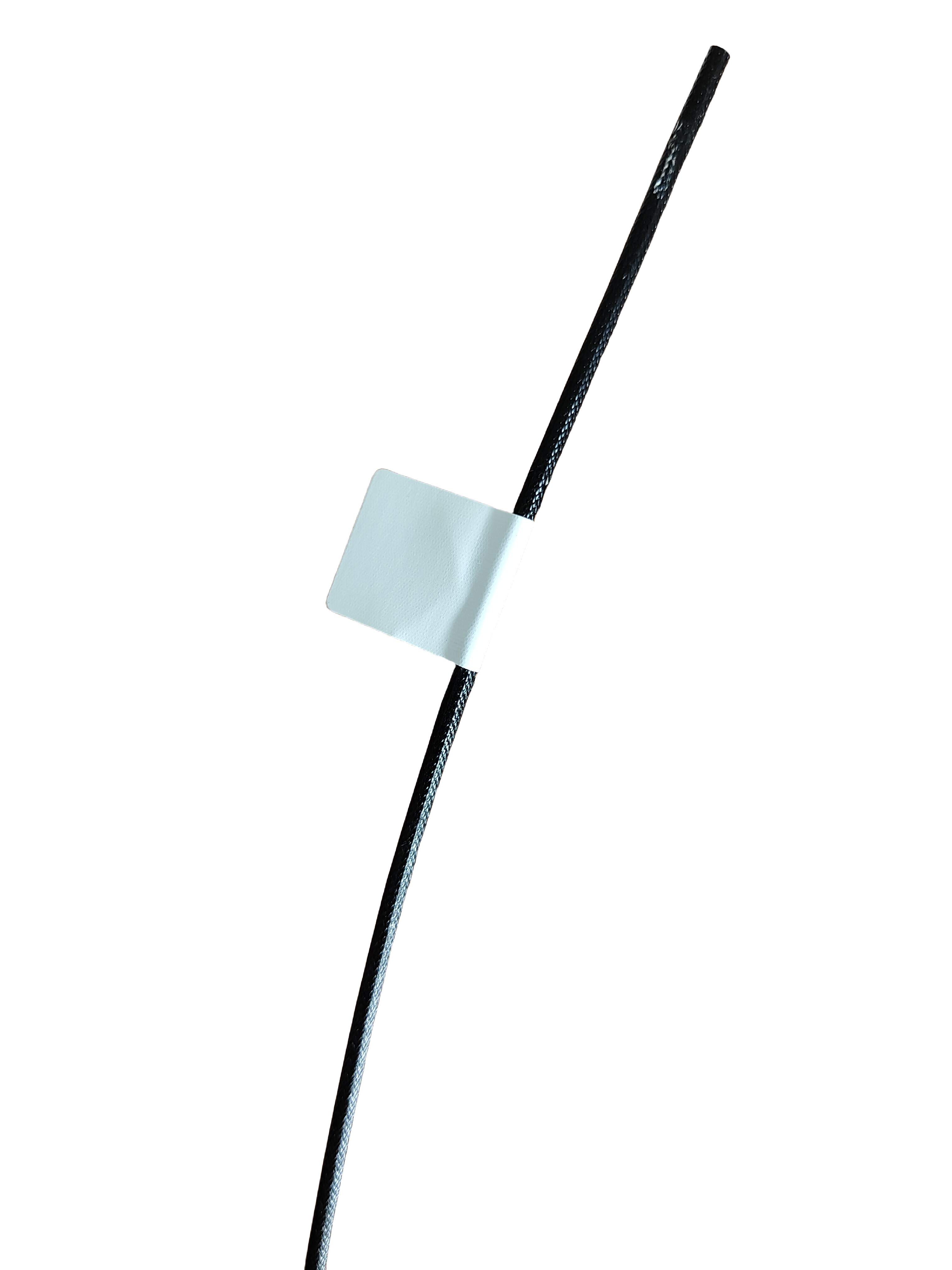
Polyimide, often associated with nylon, can appear in different label constructions. A Polyimide film label and a Polyimide-coated nylon cloth label are not automatically interchangeable.
Certain nylon cloth constructions are selected for their ability to conform around wires and tightly curved surfaces. Film-based products must be assessed according to their own thickness, adhesive and application instructions.
GAOFE lists Polyimide Film wire and cable identification labels for harness-related applications. When evaluating this option, provide the cable diameter, mounting method and any processing conditions.
A label described for use in a heat-shrink application is not necessarily a heat-shrink sleeve. Confirm whether it is applied to a cable, attached to sleeving or used elsewhere in the assembly.
Polyester Labels: A Common Choice for Durable Identification
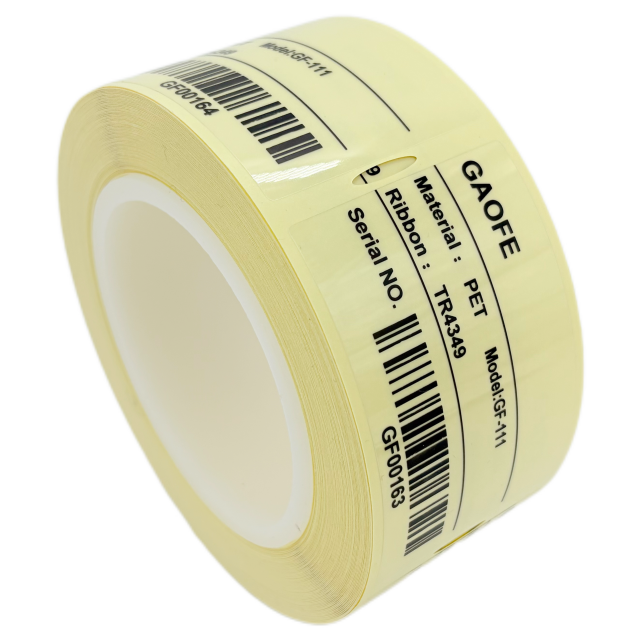
Polyester, commonly called PET, is used for asset IDs, serial numbers, equipment markings and component identification.
Its dimensional stability and resistance to tearing make it a useful starting point for labels that need to retain a clear shape and readable information. White, silver and transparent finishes offer different visual options.
For example, GAOFE’s transparent polyester electrical equipment labels allow the underlying surface to remain visible. However, transparent material requires attention to print contrast. A barcode that reads well on a light surface may perform differently on a dark or patterned housing.
PET does not automatically guarantee outdoor life, solvent resistance or suitability for every curved surface. Those properties depend on the complete label construction.
Compare the Application, Not Just the Material Name
| Selection point | Polymide-based labels | Polyester labels |
| Typical evaluation focus | Wire marking, harness identification and construction-specific applications | Equipment, asset and component identification |
| Flexibility | Depends on whether the product is film, cloth or another construction | Depends on film thickness and construction |
| Appearance | Varies with the product structure and coating | White, silver and transparent options are available |
| Printing | Must match the printable surface | Must match the printable surface |
| Heat and chemical exposure | Verify the particular grade and finished label | Verify the particular grade and finished label |
| Main purchasing check | Confirm film versus cloth and the intended mounting method | Confirm surface adhesion, finish and print durability |
Neither material should be selected using a universal temperature rating. Ask for data covering the proposed product and exposure conditions.
How to Choose Label Material for Your Application
Match the Label to the Surface
Start with the surface receiving the label: smooth metal, painted equipment, plastic, glass, a cable jacket or a textured container.
Tight curves can create lifting forces at label edges. Rough surfaces reduce adhesive contact. Some plastics require adhesives specifically selected for reliable bonding.
Provide a representative surface sample whenever possible. Also distinguish the temperature during application from the temperature during later service.
Define Moisture, Chemicals and Heat
“Waterproof” and “chemical resistant” are incomplete purchasing specifications.
Describe whether the label faces occasional splashes, repeated wiping, immersion or pressure washing. Name the cleaning agents and provide their concentration and contact time where known.
For heat exposure, distinguish continuous operation from short processing peaks. Include the full sequence if the label must survive several manufacturing stages.
Outdoor applications also require evaluation of sunlight, rain and temperature cycling. A material suitable indoors may need a different adhesive, coating or protective layer for outdoor use.
Match the Material to the Printing Process
Thermal transfer, direct thermal, inkjet and laser printing require compatible media. A printable coating designed for one process should not be assumed suitable for another.
For thermal transfer printing, select the ribbon together with the label. GAOFE’s resin ribbon options can be reviewed for applications requiring durable print, subject to coating and printer compatibility.
Test both the visible text and machine-readable information. Smudging, glare or insufficient contrast can make a physically intact label unusable.
Compare Total Cost
The cheapest roll may create higher costs through relabeling, failed scans or lost identification. Conversely, a specialist material may add unnecessary expense to a simple indoor packaging application.
Compare material cost with printing, application time, expected replacement frequency and the consequences of failure.
How Should You Validate a Label Before Ordering?
Test the Complete Printed Label
Apply samples to the actual surface using the intended preparation and application process. Allow the adhesive bond to develop according to supplier instructions.
Then expose samples to representative handling and environmental conditions. Check for lifting, shrinking, cracking, adhesive failure and print damage.
Scan barcodes before and after testing. Where formal verification is needed, the GS1 barcode verification guidelines provide a reference for assessing barcode quality and encoded data.
Verify Required Documentation
If a safety-related marking requires a recognized labeling system, request documentation for the exact construction and printing combination.
The UL Solutions Marking and Labeling Systems Program explains how marking permanence and conditions of use are evaluated. A generic Polyimide or Polyester description does not establish recognition.
Before ordering, confirm the material code, adhesive, finish, dimensions, printing method and relevant performance evidence.
Frequently Asked Questions
1. What is the best material for waterproof labels?
A suitable synthetic film is often a better starting point than ordinary paper. However, water resistance must be verified for the adhesive and printed image as well as the face material.
2. Are Polyimide and Polyimide the same material?
No. They are different polymer families. Confirm the supplier’s material code and technical datasheet rather than treating the names as interchangeable.
3. Is Polyester always better than Polyimide?
No. Polyester is a common choice for equipment and asset identification, while particular Polyimide constructions can suit wire marking and other needs. The intended surface and complete construction determine suitability.
4. Can the same ribbon print on Polyimide and Polyester labels?
Possibly, if it is compatible with both coatings and the printer. Confirm the recommended combination and test the finished print rather than relying only on the material name.
5. Can I choose a label using its temperature rating alone?
No. Adhesion, chemicals, moisture, exposure duration, print durability and required service life also matter. Confirm the conditions under which the stated rating applies.
Find a Label Material for Your Application
Choosing between Polyimide, Polyester and other materials starts with understanding where the label will be applied and what it must withstand.
Contact GAOFE with your surface material, label size, printing method and exposure conditions. Discuss suitable label constructions and the samples or technical information needed for evaluation.


