Standard asset tags and barcodes routinely fail under extreme operational conditions. This failure leads to immediate breakdowns in supply chain visibility and asset management. When conventional tracking methods degrade due to extreme heat, caustic chemicals, severe abrasion, or high humidity, organizations face severe consequences. You risk traceability loss, regulatory non-compliance, and extended operational downtime. For environments that exceed the thresholds of standard identification methods, ceramic labels offer a specialized, permanent solution. These robust tags survive where polymers melt and metals corrode. We will detail the performance specifications, comparative trade-offs, and selection criteria required to evaluate these identification tools for your facility. You will learn how to match substrate properties to environmental hazards and secure permanent barcode readability.
Key Takeaways
Ceramic labels maintain data integrity and structural stability in temperatures exceeding 1000°C (1832°F), far surpassing standard polymers and most metals.
The fusing process of ceramic materials renders these labels virtually immune to harsh chemical baths, UV degradation, extreme humidity, and mechanical abrasion.
Successful implementation requires precise substrate matching and appropriate attachment methods (high-temp adhesives, mechanical fastening, or welding).
The Limits of Standard Industrial Labels in Harsh Environments
Where Conventional Materials Fail
Standard tracking materials possess strict operational limits. Polyester and vinyl tags melt or deform when temperatures exceed 150°C. At these temperatures, standard acrylic adhesives cross-link, become brittle, and lose all bonding strength. Basic metal tags oxidize rapidly in corrosive atmospheres, destroying the surface contrast needed for optical scanners. Top-coated Industrial labels rely on thermal transfer inks that smudge or dissolve during chemical washes. Prolonged outdoor UV exposure turns standard polymers brittle, causing them to flake off the asset. Heavy steam delaminates standard multi-layer tags. When you deploy these conventional materials in extreme settings, failure is a guarantee.
The failure mechanisms vary depending on the material, but the result is always a lost asset identifier. Polyimide tags handle heat better than polyester, but they lack physical abrasion resistance. A simple wire brush during routine maintenance will obliterate a printed polyimide barcode. Anodized aluminum tags survive moderate heat, but highly acidic or alkaline environments strip the anodized layer entirely. You cannot rely on general-purpose tags when your operational environment involves direct flame, molten metal proximity, or concentrated acid baths.
The Cost of Traceability Loss
Unreadable barcodes trigger a cascade of operational failures. Manual data entry replaces automated scanning, introducing human error into critical databases. Operators misread serial numbers, leading to incorrect maintenance logs or misrouted components. Lost inventory forces unnecessary reordering and inflates carrying costs. In regulated sectors like aerospace or medical device manufacturing, missing asset tags result in failed compliance audits and severe financial penalties.
Safety hazards emerge when operators cannot verify the maintenance history of high-pressure valves, lifting equipment, or chemical containers. If a tag fails on a critical structural component, you lose the entire metallurgical history of that part. Traceability loss directly erodes operational efficiency, inflates labor costs through rework, and compromises facility safety.
Defining Extreme Success Criteria
Viable extreme-environment identification requires stringent baseline metrics. A successful tag must maintain optical contrast after 500 hours of continuous salt spray exposure. It must survive repeated, rapid thermal cycling in industrial furnaces without cracking or delaminating. In high-moisture environments, the material must show zero degradation after months of 100% humidity or underwater submersion.
Success means the barcode scans perfectly on the first attempt, regardless of the environmental abuse it has endured. The tag must offer a Grade A or B read rate according to ISO/IEC 15415 standards, even after passing through a 800°C heat treatment cycle. It must resist aggressive solvents like methyl ethyl ketone (MEK) and acetone without any loss of print clarity.
| Material Type | Primary Failure Mode | Temperature Limit | Chemical Vulnerability |
| Standard Polyester | Adhesive melting, topcoat yellowing | 150°C | High (Fails in strong solvents) |
| High-Temp Polyimide | Physical abrasion, continuous high heat | 300°C | Moderate (Resists mild solvents) |
| Anodized Aluminum | Galvanic corrosion, pH extremes | 400°C | High (Fails in acids/alkalines) |
| Stainless Steel (Laser Marked) | Surface oxidation, low contrast | 800°C | Low (Vulnerable to chlorides) |
What Are Ceramic Labels? Material Science and Construction
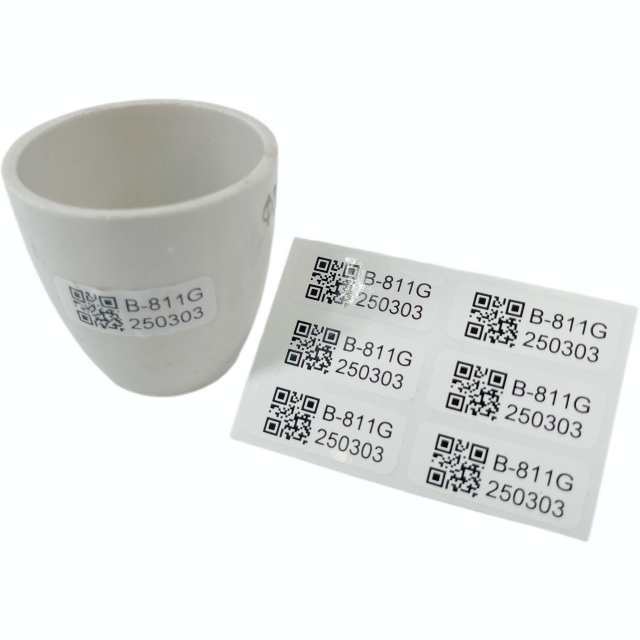
Material Composition
Manufacturers build these specialized tags from high-purity inorganic materials. The primary substrates consist of alumina (aluminum oxide) or zirconia (zirconium dioxide). These technical ceramics offer exceptional thermal stability, electrical insulation, and mechanical strength. Alumina is the standard choice for most high-heat applications, providing a rigid, bright white background for optimal barcode contrast. Zirconia offers higher fracture toughness, making it suitable for environments with high mechanical impact.
Instead of standard carbon-based inks or thermal transfer ribbons, the printing process utilizes specialized glass-frit or ceramic-based pigments. These inorganic pigments consist of metal oxides mixed with fine glass powder. They withstand extreme thermal loads without oxidizing, burning off, or fading. The combination of an inorganic substrate and inorganic pigment forms the foundation of the tag's extreme durability.
The Fusing Process
The manufacturing process differs entirely from standard label printing. Technicians print the barcode, serial numbers, and alphanumeric data onto the ceramic substrate using the glass-frit inks. The label then enters a high-temperature industrial kiln. During this firing process, temperatures ramp up slowly to burn off any temporary organic binders, then peak at temperatures often exceeding 800°C.
The intense heat melts the glass-frit, fusing the metal oxide data permanently into the ceramic base. The kiln then cools the tags slowly to prevent thermal shock. The image does not sit on the surface like a traditional printed label. It becomes encapsulated beneath a protective, transparent glaze. This firing process permanently alters the molecular structure of the tag, locking the data inside the ceramic matrix.
Structural Integrity
This fused construction creates unparalleled structural integrity. Because the data layer and the substrate become a single continuous material, delamination is physically impossible. There are no separate layers of face stock, adhesive, and topcoat to separate under stress. The protective glaze prevents chemical solvents from reaching the pigment.
UV radiation cannot penetrate the inorganic structure to cause fading. Unlike top-coated industrial tags that rely on chemical adhesion between distinct layers, the fired ceramic acts as a monolithic barrier against environmental degradation. You can expose the tag to decades of direct sunlight, heavy rain, and industrial pollution without any loss of readability.
Performance Specifications and Environmental Tolerances
Extreme Temperature Resistance
Thermal stability defines the primary advantage of ceramic materials. These tags operate flawlessly across the entire temperature spectrum. At the lower extreme, they withstand cryogenic storage conditions down to -196°C (liquid nitrogen) without becoming brittle. Because they lack a polymer chain structure, they do not shatter under extreme cold.
At the upper extreme, standard alumina tags survive continuous direct furnace exposure up to 1000°C. Specialized zirconia variants can endure even higher thermal loads. They maintain structural shape and barcode contrast through rapid thermal cycling that would warp or melt traditional metal and polymer tags. You can pull a tagged asset directly from a 800°C furnace and drop it into a quenching bath without destroying the barcode.
Chemical and Solvent Immunity
Inorganic ceramic structures ignore aggressive chemical attacks. They exhibit complete immunity to concentrated sulfuric acid, hydrochloric acid, and caustic soda. Industrial solvents like MEK, acetone, xylene, and toluene cannot dissolve the fused glaze. Facilities utilizing prolonged salt-fog exposure or harsh chemical washdowns rely on these tags because the material simply does not react with corrosive agents.
The pH level of the environment becomes irrelevant to the survival of the barcode. You can submerge the tag in a highly alkaline degreasing bath, followed immediately by an acidic pickling line, and the barcode will scan perfectly. This chemical immunity makes them the only viable choice for chemical processing plants and electroplating facilities.
Mechanical Abrasion and UV Durability
Ceramic ranks exceptionally high on the Mohs hardness scale, typically scoring between 7 and 9. This hardness far exceeds that of stainless steel or anodized aluminum. Wire brushes, sandblasting, and heavy mechanical friction barely scratch the glazed surface. You can drag a hardened steel file across the barcode without damaging the data.
Furthermore, the inorganic composition provides absolute UV stability. Decades of direct sunlight exposure will not yellow the substrate or fade the data. The barcode remains as crisp as the day it left the kiln. This makes them ideal for long-term outdoor asset tracking in harsh desert or coastal environments.
Humidity, Steam, and Submersion
Moisture destroys standard adhesives and paper-based substrates. Ceramic materials offer zero porosity. They absorb no water. This makes them ideal for high-moisture environments. They survive thousands of repeated autoclave sterilization cycles involving high-pressure steam.
You can deploy them in continuous steam exposure applications or long-term underwater submersion. Where standard topcoats blister and peel, the fused glaze remains perfectly intact. Marine environments, offshore oil rigs, and subsea equipment rely on these tags to maintain traceability in highly corrosive saltwater conditions.
Primary Applications and Industry Use Cases
Automotive and Aerospace Manufacturing
Automotive plants track components through brutal manufacturing stages. Engine blocks require identification during casting processes that involve extreme heat and molten metal proximity. Chassis components carry tags through high-heat paint curing ovens and e-coat chemical baths. Standard tags burn away in these ovens, but ceramic tags provide continuous traceability from the foundry to final assembly.
Aerospace manufacturers use these tags to track turbine blades and structural components through heat treatment and chemical milling. The tags ensure cradle-to-grave traceability for critical safety components. When an aircraft part requires a 30-year lifespan, the identification tag must survive the same duration without degrading.
Chemical Processing and Metallurgy
Chemical plants operate in highly corrosive atmospheres. Facility managers attach these tags to vats, pipes, and structural steel exposed to constant acidic fumes. The tags identify hazardous material lines and critical shut-off valves. When a pipe leak sprays concentrated acid, the ceramic tag remains readable, allowing emergency responders to identify the contents.
In metallurgy, steel mills and foundries track ladles, molds, and raw billets. The tags survive the radiant heat of molten metal and the abrasive dust of the foundry floor. They provide reliable identification for maintenance scheduling and hazard communication in environments that destroy conventional signage.
Laboratory and Medical Sterilization
Medical research facilities require absolute sample traceability. Surgical equipment and laboratory assets undergo rigorous sterilization protocols. These protocols involve repeated autoclave cycles, utilizing high-pressure steam at 134°C, alongside harsh chemical sterilants like vaporized hydrogen peroxide.
Polymer tags warp, peel, and harbor bacteria under these conditions. Fused ceramic tags remain firmly attached and perfectly readable. Their non-porous surface prevents bacterial growth, ensuring critical medical equipment meets strict regulatory tracking requirements while maintaining a sterile environment.
Evaluating Ceramic Labels vs. Alternative Identification Methods
Ceramic vs. Anodized Aluminum
Anodized aluminum serves as a common mid-tier industrial tag. It handles moderate heat and physical impacts well. However, aluminum fails under extreme pH conditions. Highly acidic or highly alkaline environments strip the anodized layer, destroying the barcode and exposing the raw metal to rapid corrosion.
Aluminum also softens and warps as temperatures approach 500°C. Ceramic ignores pH extremes entirely and maintains rigidity well past 1000°C. While aluminum offers slight flexibility for mounting on curved surfaces, ceramic provides absolute chemical and thermal superiority. If your process involves caustic washes, aluminum will fail.
Ceramic vs. High-Temp Polyimide (Kapton)
Polyimide labels handle high temperatures better than standard plastics. Electronics manufacturers use them extensively for printed circuit board tracking. They survive short-term wave soldering processes around 260°C to 300°C. However, polyimide degrades, chars, and becomes brittle during continuous exposure above 300°C.
Polyimide also lacks physical abrasion resistance. A wire brush or heavy scraping will easily destroy a printed polyimide barcode. Ceramic handles continuous temperatures three times higher than polyimide and shrugs off severe mechanical abrasion. Polyimide is a temporary high-heat solution; ceramic is a permanent extreme-environment solution.
Material Comparison Summary
| Performance Metric | Ceramic Labels | Anodized Aluminum | High-Temp Polyimide |
| Max Continuous Temp | 1000°C+ | ~400°C | ~260°C |
| Chemical Resistance | Excellent (Immune to pH extremes) | Poor (Fails in high/low pH) | Moderate |
| Abrasion Resistance | Excellent (Mohs 7-9) | Moderate | Low |
| Flexibility | Rigid (Zero flexibility) | Slightly flexible | Highly flexible |
| UV Stability | Absolute (No fading) | High | Moderate (Can yellow) |
Selection Criteria: Specifying the Right Ceramic Label
Substrate Compatibility
You must match the label material to the host asset. All materials expand and contract with temperature changes. This metric is the Coefficient of Thermal Expansion (CTE). If you bond a rigid ceramic tag to a metal asset that expands rapidly under heat, the differing expansion rates will shear the adhesive bond or crack the tag.
Alumina ceramic has a relatively low CTE. Stainless steel has a high CTE. When bonding these two materials, you cannot use a rigid epoxy. You must use a flexible high-temperature silicone adhesive that absorbs the differential expansion. Consult with engineers to select a ceramic composition and attachment method that accommodates the thermal movement of your specific steel, aluminum, or glass asset.
Attachment Methods and Adhesive Strength
Attachment dictates survival. You cannot use standard acrylic adhesives in extreme heat. For temperatures up to 300°C, high-temperature silicone adhesives work well. For higher thermal loads, you must utilize specialized liquid ceramic adhesives or high-temp epoxies. These liquid adhesives require proper curing times and temperatures to achieve maximum bond strength.
Alternatively, mechanical fastening eliminates adhesive failure entirely. Specify tags with pre-drilled holes for rivets, screws, or safety wire. When using mechanical fasteners, use high-temperature washers to distribute the load and prevent cracking the ceramic. For heavy industrial assets, spot welding a metal-backed ceramic tag provides the most permanent bond possible, completely bypassing the limitations of chemical adhesives.
Print Methods and Customization
Do not attempt to print extreme-environment tags on-site. Standard thermal transfer printers cannot achieve the temperatures required to fuse glass-frit inks. You must procure pre-printed labels directly from the manufacturer. You provide the data sequence, and the manufacturer kiln-fires the barcodes into the substrate.
While this requires upfront data planning and longer lead times, it guarantees the durability required for extreme environments. You can specify custom serialization, company logos, and specific barcode symbologies. The manufacturer handles the complex firing profiles, delivering a finished, indestructible product ready for immediate installation.
Data Density and Readability Standards
Select the appropriate barcode symbology for your application. 2D Data Matrix codes offer high data density in a minimal footprint, making them ideal for small ceramic tags. They also include built-in error correction, allowing the scanner to read the code even if a small portion is obscured by industrial grime. 1D linear barcodes require more surface area but scan easily from a distance.
Ensure the manufacturer guarantees high optical contrast ratios. The dark fired pigment must contrast sharply against the white ceramic background to ensure rapid, error-free automated optical scanning. Specify a minimum ISO print quality grade when ordering to ensure your optical scanners can read the tags reliably under harsh factory lighting.
Regulatory and Compliance Considerations
Verify that your selected tags meet all relevant industry standards. Defense contractors must ensure the tags comply with MIL-STD-130 for Unique Identification (UID) marks. This standard dictates specific data formats and contrast requirements for military assets. Electronics manufacturers require RoHS and REACH compliance to ensure the materials contain no restricted hazardous substances.
Medical device manufacturers need tags that meet FDA unique device identification (UDI) requirements. Specify these compliance needs during the initial procurement phase. Reputable manufacturers will provide certification documents proving their ceramic materials meet these stringent global standards.
Implementation Risks and Mitigation Strategies
Surface Preparation Requirements
Permanent adhesion requires rigorous surface preparation. Industrial assets carry oils, rust, scale, and manufacturing residues. If you apply adhesive over grease or loose rust, the tag will fail immediately. Implement strict surface profiling protocols for your installation teams.
Degrease the mounting area thoroughly with industrial solvents like acetone or isopropyl alcohol.
Lightly abrade the surface using an angle grinder with a wire wheel or 80-grit sandpaper to create a mechanical tooth for the adhesive.
Perform a final solvent wipe to remove all abrasive dust and metal shavings.
Apply the high-temperature adhesive immediately before the raw metal begins to oxidize.
Proper surface preparation prevents the vast majority of adhesive failures in the field.
Handling Fragility Before Application
Ceramic possesses immense compressive strength but lacks tensile flexibility. Before mounting, these tags are brittle. Dropping a raw tag on a concrete floor will likely shatter it. Establish strict handling protocols for your installation teams. Transport the tags in padded containers directly to the installation site.
Do not over-torque screws or rivets during mechanical installation. Localized pressure from a tightened screw will crack the rigid substrate. Use a torque wrench to apply consistent, gentle pressure. Once properly mounted and fully supported by the rigid host asset, the fragility risk disappears, and the tag gains immense impact resistance.
Hardware Integration
The protective fused glaze creates a highly reflective surface. Direct overhead lighting or powerful scanner flashes can cause glare, blinding the optical reader and preventing a successful scan. Mitigate this hardware integration risk by calibrating your scanning equipment.
Adjust the scanner angle to 15 or 30 degrees off-perpendicular to deflect the glare away from the lens. Utilize scanners with diffused illumination settings specifically designed for reading direct part marks (DPM) and highly reflective surfaces. Train your operators on the correct scanning angles to ensure rapid data capture on the factory floor.
Conclusion
Audit your facility to identify specific environmental failure points, logging exact maximum temperatures, chemical exposures, and mechanical abrasion risks.
Calculate the thermal expansion rate of your target assets to ensure proper substrate matching and select the correct flexible or rigid adhesive.
Request physical sample tags from manufacturers and conduct in-situ testing under actual operational conditions before committing to a full facility rollout.
Finalize your attachment strategy by comparing high-temp liquid adhesives against mechanical fastening for your specific workflow and asset types.
Calibrate your optical scanning hardware to read high-contrast, reflective glazed surfaces at a 15-degree offset to eliminate glare.
FAQ
Q: What is the maximum temperature ceramic labels can withstand?
A: High-purity alumina tags routinely withstand continuous exposure to temperatures up to 1000°C (1832°F). Specialized compositions endure even higher thermal loads. They maintain structural integrity and barcode readability through rapid thermal cycling and direct furnace exposure without melting or warping.
Q: How are ceramic labels attached to metal surfaces in high-heat environments?
A: Standard adhesives fail in extreme heat. For high-temperature applications, technicians use specialized liquid ceramic adhesives, high-temp epoxies, or mechanical fasteners like rivets and screws. Metal-backed ceramic tags can also be spot-welded directly to the asset.
Q: Are ceramic labels resistant to harsh acids and caustic chemicals?
A: Yes. The inorganic composition and fused glass glaze render them virtually immune to chemical attack. They easily survive prolonged exposure to sulfuric acid, hydrochloric acid, caustic soda, and aggressive industrial solvents without degrading.
Q: How do ceramic labels compare to stainless steel industrial tags?
A: While stainless steel is durable, it oxidizes at extreme temperatures and can corrode in specific chemical environments. Ceramic offers superior heat resistance, complete immunity to pH extremes, and a much harder surface that resists severe mechanical abrasion better than steel.
Q: Can ceramic labels be printed on-site using thermal transfer printers?
A: No. True extreme-environment ceramic tags require kiln-firing at temperatures exceeding 800°C to fuse the glass-frit inks into the substrate. Standard on-site printers cannot achieve this. You must order them pre-printed from the manufacturer.
Q: Do ceramic labels crack under thermal shock or rapid temperature changes?
A: High-quality technical ceramics are engineered to resist thermal shock. However, if bonded rigidly to a metal asset with a vastly different thermal expansion rate, the resulting mechanical stress can cause cracking. Proper substrate matching and flexible high-temp adhesives prevent this issue.


