A high-temperature environment does not just damage a label; it destroys asset traceability, leading to compliance failures, lost inventory, and halted production lines. Specifying the correct label material remains a significant challenge when manufacturers rely on vague terms like "heat-resistant." To engineer a reliable tracking solution, you need exact data on peak temperatures, exposure durations, and cooling cycles. You must match specific material science—such as polyester, polyimide, ceramics, and metals—to exact thermal brackets. Whether your process involves 200°C, 500°C, or 1200°C+ conditions, selecting the right combination ensures barcode readability and adhesive integrity throughout the entire product lifecycle. Without this precision, you risk catastrophic data loss during critical manufacturing stages, forcing manual rework and compromising quality control audits.
Material dictates maximum thermal tolerance: Standard polyesters fail past 150°C, polyimides handle 200°C–500°C ranges (ideal for PCB soldering), and extreme 1200°C+ environments require ceramic or metallic solutions.
Duration is as critical as peak heat: A label rated for 300°C may only survive that temperature for 60 seconds; continuous operating temperatures are significantly lower than short-burst thresholds.
Adhesive and ink must match the facestock: High-temperature labels require specialized high-heat adhesives and compatible thermal transfer ribbons to prevent the print from melting or the label from detaching.
Secondary stressors accelerate failure: Heat rarely exists in a vacuum; chemical washes, rapid cooling, high-pressure steam, and mechanical abrasion must be factored into the evaluation process.
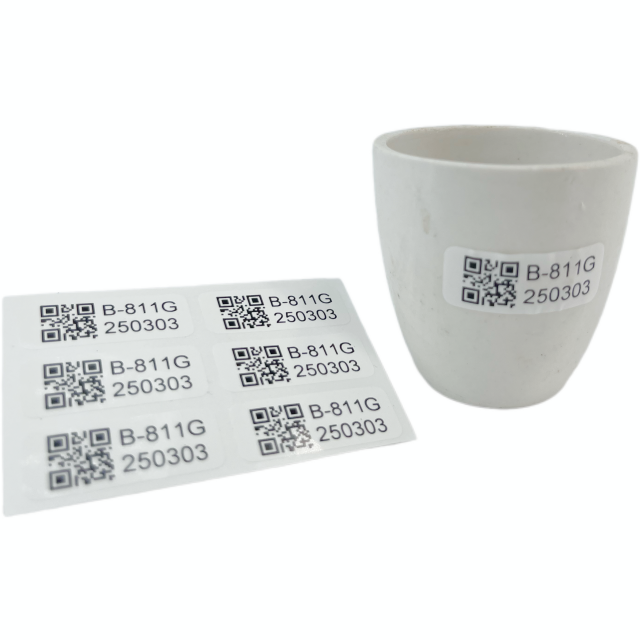
Why High-Temperature Labels Fail and What It Costs
Label failure in extreme heat manifests in several destructive ways. Adhesive degradation causes delamination, leaving untrackable components on the assembly line. When the adhesive cross-linking breaks down under thermal load, the label simply falls off, or worse, oozes adhesive residue onto sensitive machinery. Facestock shrinking or melting distorts the physical dimensions of the tag, warping the printed barcode beyond recognition. Print discoloration or ink burn-off renders barcodes entirely unreadable by scanners. Any of these failures compromise the entire tracking system, forcing operators to manually identify parts, which introduces human error and slows down throughput.
A successful implementation requires the label to maintain 100% data integrity, physical adhesion, and dimensional stability from the application point through the end-user environment. When you deploy High-Temperature Labels, you secure the chain of custody. Lost traceability in highly regulated sectors carries severe consequences. Automotive component recalls depend on exact batch tracking; if a brake caliper loses its identification during the paint bake cycle, the manufacturer cannot isolate defective batches. Aerospace compliance audits require permanent identification of engine parts exposed to extreme friction and exhaust heat. Electronics manufacturing defects must be traced back to specific wave soldering batches. Without durable identification, these processes collapse, leading to massive regulatory fines and compromised safety.
To understand the operational impact, consider the following failure modes and their direct consequences on the production floor:
Adhesive Outgassing: In vacuum or high-heat environments, standard adhesives release volatile organic compounds (VOCs). This outgassing can contaminate sensitive electronic components or optical sensors nearby.
Embrittlement: Prolonged exposure to heat bakes the flexibility out of polymer facestocks. The label becomes brittle and shatters upon minor physical impact or vibration during transit.
Thermal Contraction: As materials cool rapidly from a high-heat state, they contract. If the label facestock contracts at a different rate than the substrate, it creates shear stress that breaks the adhesive bond.
Ribbon Smudging: Using a wax or wax-resin ribbon instead of a full-resin formulation causes the ink to liquefy and smear when touched by automated handling equipment while still hot.
How to Choose Label Materials for Different Temperature Ranges
Up to 200°C: Boiling Water, Autoclaves, and Rubber Curing
Industrial processes operating up to 200°C include boiling water baths (100°C to 110°C), laboratory steam autoclaves (130°C–150°C), and automotive paint bake cycles (150°C–220°C). Rubber component curing processes also require materials to harden, shape, and finish at or near this threshold. Standard labeling materials cannot survive these conditions. Paper incinerates, and standard polypropylene melts into an unrecognizable plastic puddle.
Temperature-modified polyesters paired with advanced acrylic adhesives provide the primary solution for this bracket. While standard polyester degrades quickly over 150°C, specialized temperature-modified polyester labels can resist extreme peak temperatures of up to 300°C for ultra-short exposures, typically up to 60 seconds. However, prolonged exposure at these absolute limits causes severe shrinkage, embrittlement, and yellowing. You must align the exposure time with the material's continuous operating rating rather than its peak survival metric. For example, an autoclave cycle involves not just heat, but pressurized steam. The acrylic adhesive must be formulated to resist moisture penetration, preventing the label from lifting at the edges during the sterilization cycle.
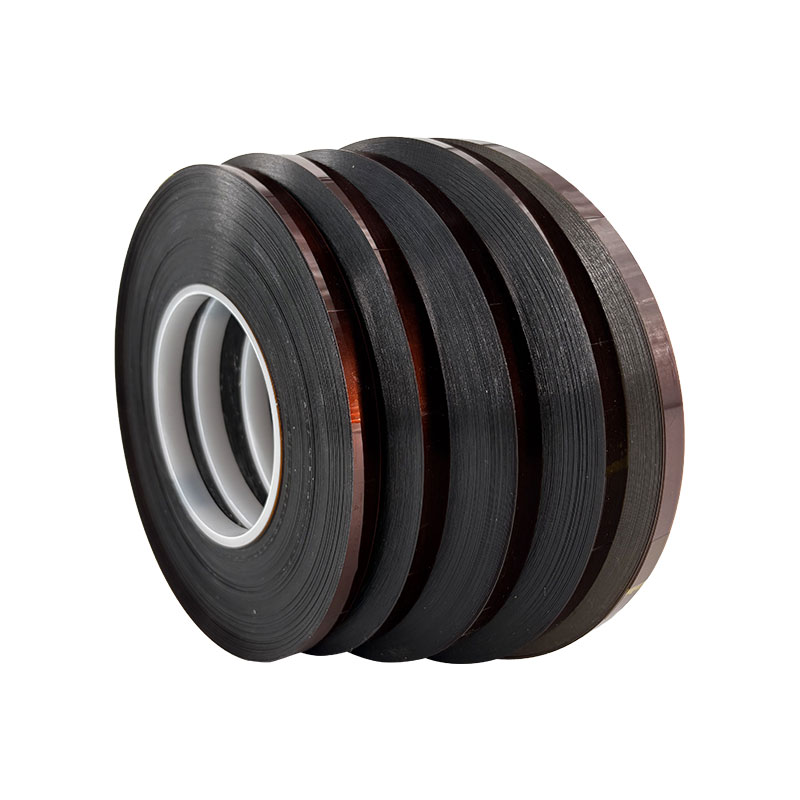
200°C to 500°C: PCB Soldering and Industrial Processing
Environments pushing between 200°C and 500°C demand highly specialized polymers. Applications include Printed Circuit Board (PCB) wave soldering, lead-free reflow processes (200°C–260°C), automotive engine component tracking, and industrial exhaust systems. Polyimide, commonly known by the trade name Kapton, serves as the industry standard for these electronics and automotive applications. Polyimide does not melt; it eventually chars at extreme temperatures, making it exceptionally stable for high-heat manufacturing.
Polyimide delivers extreme dimensional stability and flame retardance. It handles continuous temperatures of 350°C and withstands short-term bursts up to 500°C. Electronics labeling introduces the micro-label challenge. These tags must remain dimensionally stable on a miniature scale—often as small as 5mm by 5mm—without curling at the edges. Edge curling prevents accurate barcode scanning on high-density boards and can interfere with automated pick-and-place machinery. To succeed, you must pair polyimide with ultra-high-temperature silicone or acrylic adhesives that will not outgas, bubble, or slip during extreme thermal soldering cycles. Silicone adhesives generally offer higher temperature resistance than acrylics, but they require careful handling to avoid silicone migration, which can interfere with subsequent conformal coating processes on the PCB.
500°C to 1200°C+: Metal Processing, Smelting, and Aerospace
Extreme industrial environments exceed the capabilities of any polymer. Steel manufacturing, aluminum smelting, glass production, aerospace engine component marking, and ceramic firing ovens operate between 500°C and 1200°C+. At these temperatures, you must transition to anodized aluminum, stainless steel tags, and ceramic-coated labels. These materials do not rely on polymer chains, which break down under such intense thermal energy.
Implementation realities change drastically in this bracket. Traditional polymer adhesives incinerate instantly at 500°C. Securing these tags requires mechanical fasteners like rivets and stainless steel wire ties, direct welding, or specialized extreme-heat ceramic-activated adhesives that cure into a solid bond under high temperatures. For instance, in steel billet tracking, a metal tag might be spot-welded directly onto the glowing hot steel. Alternatively, ceramic labels can be applied using adhesives that actually require the heat of the furnace to cure and vitrify, forming a permanent ceramic bond with the substrate.
| Temperature Range | Primary Material | Typical Applications | Adhesive/Fastening Method | Failure Mode if Exceeded |
| Up to 200°C | Temperature-Modified Polyester | Autoclaves, Paint Bake Cycles, Rubber Curing | Advanced Acrylic | Shrinkage, Embrittlement, Yellowing |
| 200°C to 500°C | Polyimide (Kapton) | PCB Soldering, Engine Tracking | High-Temp Silicone or Acrylic | Charring, Adhesive Outgassing |
| 500°C to 1200°C+ | Stainless Steel, Ceramics, Aluminum | Smelting, Glass Production, Aerospace | Mechanical Fasteners, Welds, Ceramic Adhesives | Melting of Metal, Structural Warping |
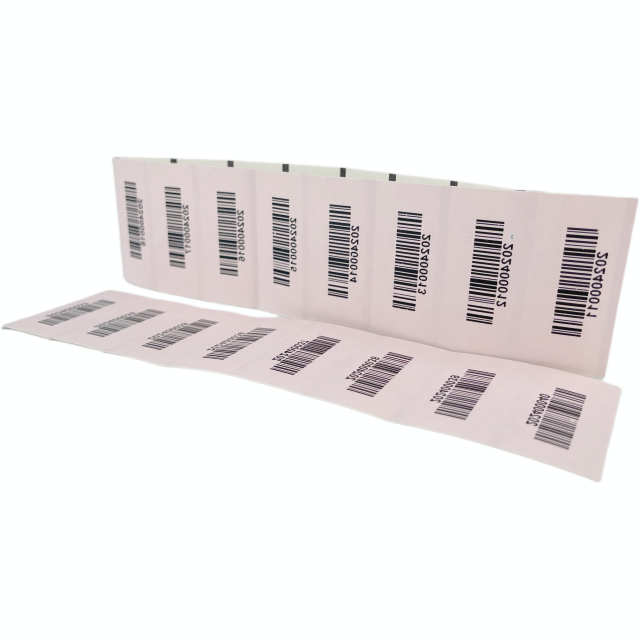
Peak vs. Continuous Temperature Ratings for High-Temperature Labels
Evaluating thermal tolerance requires understanding the conceptual trade-offs between Continuous Operating Temperature and Short-Term Peak Temperature. A label engineered for weeks, months, or years of exposure will differ drastically from one designed to survive a brief spike in heat. Buyers must map their entire thermal cycle before specifying a material. You cannot simply look at the maximum temperature of your oven and buy a label rated for that number; you must calculate the dwell time.
Consider the contrast between a temperature-modified polyester surviving 300°C for exactly 60 seconds and a polyimide label engineered to survive 250°C for several hours. If a process requires a three-hour bake cycle at 220°C, the polyester will fail completely, even though its peak rating is technically higher. The polymer chains will break down over the three hours, causing the label to crack and peel. Furthermore, thermal shock plays a critical role. Moving a component from a 260°C soldering oven directly into a room-temperature chemical cooling wash causes rapid contraction. This sudden shift severely impacts adhesive shear strength and facestock contraction rates, often leading to immediate delamination if the material is not engineered for thermal shock. The adhesive must maintain enough elasticity to absorb the differing contraction rates between the label facestock and the metal or plastic substrate.
How Chemicals, Cooling, and Abrasion Affect High-Temperature Labels
Heat rarely acts alone in industrial settings. High-heat environments almost always involve harsh chemicals. In electronics, labels face wave soldering flux and aggressive flux removers like isopropyl alcohol (IPA) or specialized saponifiers. Automotive assembly exposes tags to harsh industrial solvents, brake fluid, and engine oils. The label must resist both extreme heat and chemical degradation simultaneously without losing print legibility. If the heat softens the topcoat, the chemicals will penetrate and dissolve the printed barcode.
Mechanical abrasion presents another severe threat. Environments where labels undergo friction, high-pressure steam cleaning, or rough handling while heated require highly durable topcoats. These topcoats protect the printed message from smudging or scratching off when the material is thermally softened. For example, a hot engine block moving down an assembly line might brush against guide rails. If the label is hot, the ink is more vulnerable to smearing. Finally, surface compatibility dictates the required adhesive formulation regardless of the heat rating. Applying a label to textured cast iron, oily steel, smooth glass, or low-surface-energy plastics requires specific adhesive flow characteristics to ensure a permanent bond. A high-temp silicone adhesive that works perfectly on a smooth glass panel might fail completely on a porous, sand-cast aluminum housing.
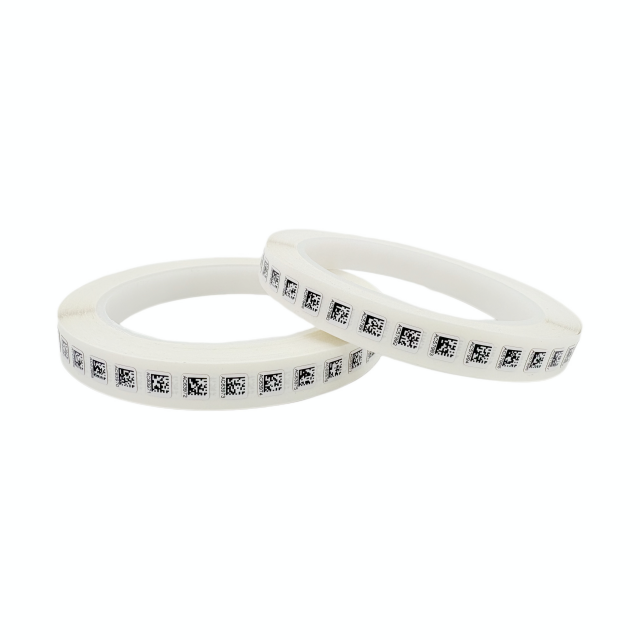
Best Printing Methods for High-Temperature Labels
A durable facestock holds no value if the ink burns off during processing. Direct thermal printing is entirely unviable for high-heat applications. Because direct thermal relies on heat-sensitive paper, the entire label facesheet will blacken instantly when exposed to environmental thermal energy, destroying the barcode and rendering the tag useless.
You must utilize full-resin thermal transfer ribbons formulated specifically for high heat and chemical resistance. These resin ribbons fuse directly with the label facestock, creating a permanent bond that withstands both temperature spikes and chemical washes. You will likely need to adjust your printer settings, increasing the printhead heat (darkness) and slowing down the print speed to ensure the resin melts completely and anchors into the polyimide or polyester topcoat. For the 500°C–1200°C bracket, printed labels become obsolete. You must transition to laser-markable metal tags, laser-activated ceramic coatings, or direct-part marking to ensure the data survives the smelting or firing process. Laser marking ablates the surface of the metal or activates a chemical change in the ceramic coating, creating a high-contrast mark that cannot be burned off or dissolved.
Cost, Automation, and Compliance for High-Temperature Labels
Procurement and engineering teams must balance performance with project budgets. Polyimide and ceramic labels require a larger investment than standard polyester. You should avoid over-specifying materials. Buying a 500°C-rated polyimide label for a process that never exceeds 150°C wastes resources. Match the material precisely to the maximum continuous exposure, factoring in a reasonable safety margin without jumping to the next, more expensive material tier unnecessarily.
Scalability also impacts implementation. Integrating these specialized materials into existing automated print-and-apply systems requires adjustments. High-heat labels often require specific printer heat settings with higher burn temperatures and slower print speeds to achieve crisp, permanent barcode edges. Automated applicators must be calibrated to handle the specific release liner and stiffness of polyimide or metal tags. Additionally, verifying labels against industry standards remains non-negotiable. Ensure your selections meet UL 969 for marking and labeling systems, MIL-STD for aerospace applications, and REACH/RoHS directives for electronics manufacturing. Failing to use compliant labels can result in rejected shipments and failed audits, negating any savings gained from using cheaper materials.
Conclusion
The term "high-temperature" is relative to your specific operational environment. Successful implementation requires precise alignment between the thermal environment, the facestock, the adhesive, and the print method. Use this shortlisting logic to guide your initial selection: deploy treated polyester for environments under 200°C (allowing for up to 300°C short peaks), utilize polyimide for 200°C–500°C applications, and rely on metal or ceramic tags for anything exceeding 500°C. Do not guess; measure your thermal profiles accurately.
Choosing a reliable high-temperature identification solution requires practical material testing and support from a supplier familiar with thermal exposure, adhesive chemistry, printing compatibility, and industrial traceability requirements. Established in 2008, GAOFE specializes in the research, development, and manufacturing of specialty labeling solutions and industrial identification systems, including high-temperature labels rated up to 1200°C, industrial printing systems, automated labeling equipment, chemical-resistant ribbons, and traceability software.
Before standardizing a solution, procurement and engineering teams should take the following immediate actions:
Request physical material samples from your supplier to evaluate stiffness and adhesive tack.
Conduct rigorous in-situ testing by running the samples through your exact thermal cycles, including all ramp-up, dwell, and cool-down phases.
Expose the test labels to all chemical washes, flux removers, and mechanical abrasion present in the actual production environment.
Verify barcode readability using your standard factory scanners after the labels have completed the full environmental cycle.
Consult directly with a specialized label converter to validate your findings and optimize the ribbon-to-facestock match before initiating bulk purchasing.
FAQ
Q: What is the difference between polyimide and polyester high-temperature labels?
A: Polyester provides a reliable solution for continuous temperatures up to 150°C–200°C, with brief peak survivability up to 300°C. Polyimide offers extreme dimensional stability for electronics and automotive applications, handling continuous exposure up to 350°C and short bursts up to 500°C without melting or shrinking.
Q: Can high-temperature labels withstand boiling water and autoclaves?
A: Yes. Specific high-temperature labels are engineered for 100°C boiling water and 130°C–150°C steam autoclaves. These applications require specialized moisture-resistant adhesives that prevent peeling, bubbling, or delamination under high-pressure moisture and heat.
Q: How long can a label survive at its maximum rated temperature?
A: Survival duration depends on the material's specific engineering. A label rated for a 300°C peak may only survive that temperature for 60 seconds before degrading. Continuous operating temperatures, which a label can withstand for hours or days, are always significantly lower than peak ratings.
Q: Why do barcodes become unreadable after extreme heat exposure?
A: Barcodes fail when the wrong printing technology is used. Direct thermal labels turn completely black under heat. Standard wax ribbons melt and smudge. High-heat environments require full-resin thermal transfer ribbons that fuse permanently with the facestock.
Q: Are standard adhesives suitable for high-heat environments?
A: No. Standard adhesives melt, outgas, or lose their shear strength when exposed to extreme heat. High-temperature applications require advanced acrylics, high-temp silicones, or ceramic-activated adhesives designed to maintain their bond during thermal expansion and contraction.
Q: What printing method works best for extreme heat?
A: For polymer labels up to 500°C, thermal transfer printing with full-resin ribbons is required. For metal and ceramic tags exposed to 500°C–1200°C+, laser marking or engraving is necessary to ensure the data survives the environment.


